Ruins, Adventure, Ceviche And Waves
We drove hundreds of kilometers through deep valleys and super-high mountain passes to get to Puno and Cusco, two of the most visited spots in Peru. Puno is located on the southeastern shore of Lake Titicaca, the world’s highest-altitude navigable lake, at an elevation of 12,421 feet above sea level.
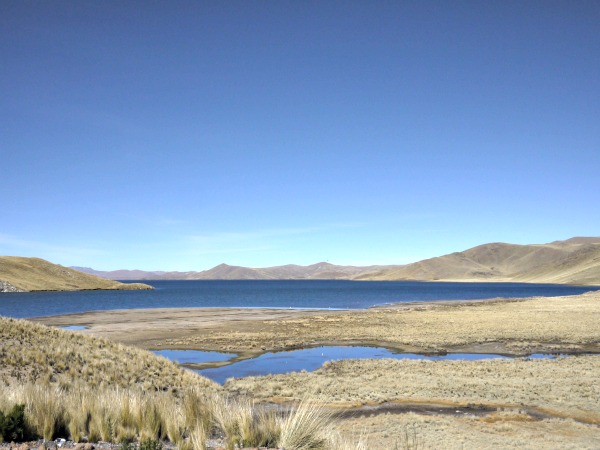
The water is a clear, cold blue, and the area is famous for its floating man-made reed islands, the Islas de Uros. There are over 2000 people who live on these islands, and they have to constantly renew the top layers of reeds as the old ones on the bottom rot out.
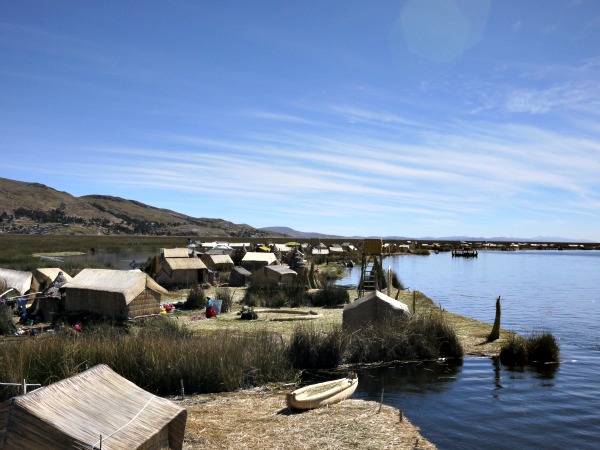


Of course, Michael asked if he could row one of the boats, and the villagers let him!
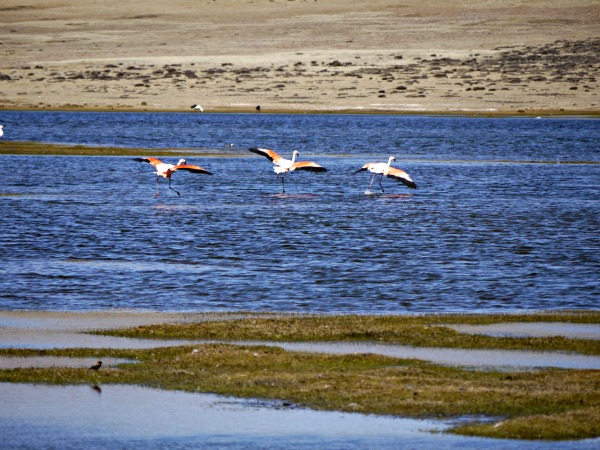
We saw flamingos during our drive through the altiplano between the Colca Canyon and Puno. Who would have thought flamingos would be so high up, and in such a cold area? I always associate flamingos with Florida.
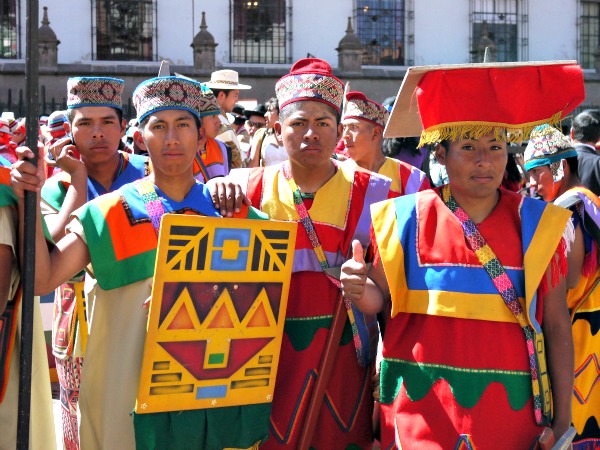
After visiting Puno, we drove to Cusco, one of the loveliest cities we’ve visited so far, with respect to architecture, ruins and ancient culture. We happened to arrive there just two days before Peru’s largest festival, called Inti Raymi and held in Cusco, which is a celebration in honor of the sun god and the Incan new year, which begins after the summer solstice. The streets were shut down every day with parades, dancing and music. Celebrants were out in full force in gorgeous costumes full of eye-popping colors.


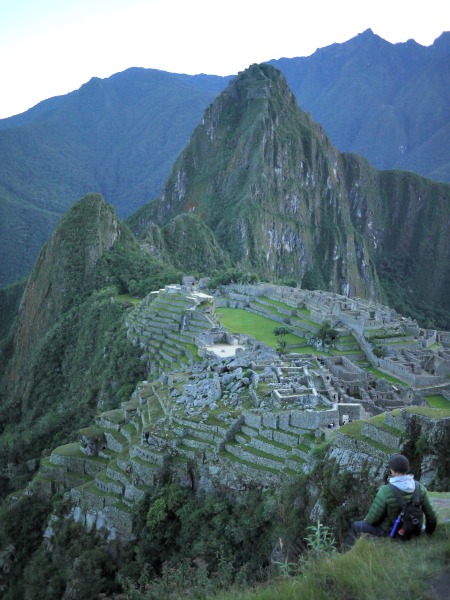
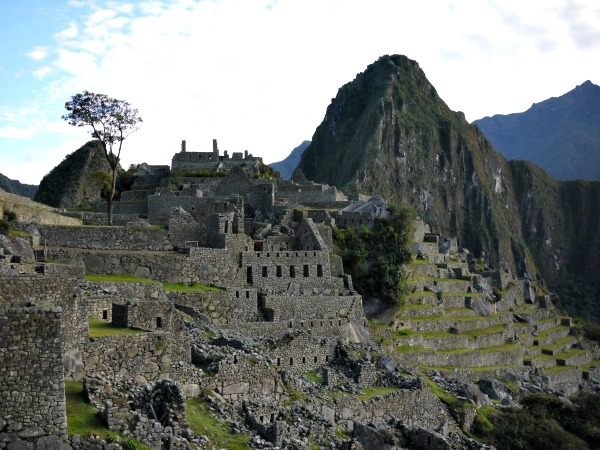
We left Cusco to visit Machu Picchu, the tourism highlight of our entire trip to Peru. We woke up at 4.30 am to get to the ruins at first light, before it’s overrun with a million other tourists, and it was worth it.

The most breathtaking — and most expensive — train ride I’ve ever taken: Ollantaytambo to Aguas Calientes.
There’s an old Incan “bridge” that can be seen if you hike 20 minutes off the main ruins. Rumor has it that the bridge used to be open to tourists until a few years ago, when one fell to his death while crossing it. Now it’s gated off, and the approach to the bridge has ropes that you can hold onto for balance, since the drop off the side of the path is several hundred meters down.
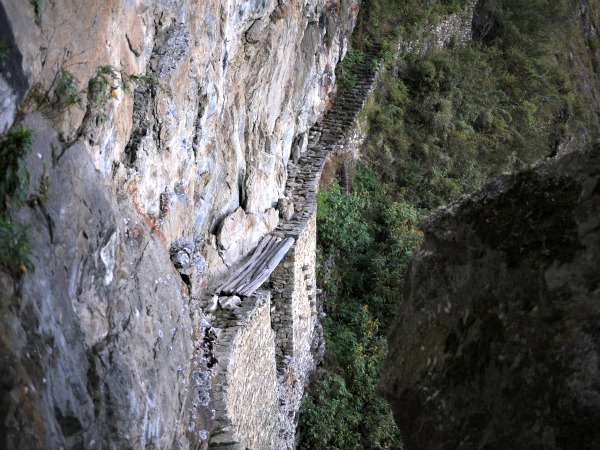
Not for the faint of heart
We hiked up Montana Machu Picchu, the big mountain behind and 1640 feet above the Machu Picchu ruins. One full hour of climbing uneven stone stairs with areas of sheer drop-offs brought us to a view of Machu Picchu that could only be rivalled by a helicopter ride. And I’m afraid of heights!
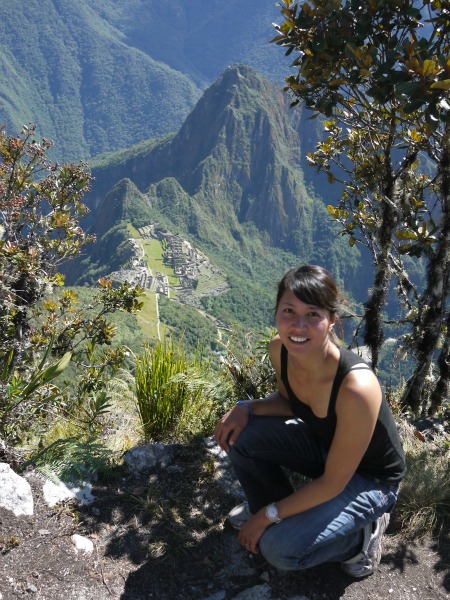
That’s tiny Machu Picchu to the left, behind me!
Machu Picchu is a must-see if you’re visiting Peru, but the area all around Cusco, called the Sacred Valley, contains scores of beautiful, worthwhile ruins and sites of interest. Two of our favorites were the Maras Salt Mines, and the ruins at Moray. The salt mines at Maras are pre-Incan and still operational. Each rectangular area belongs to one family. How do they remember which one’s theirs, since none of the rectangles are marked? And how do they know their neighbors haven’t skimmed a little of their salt off the top?! The view of the mines from above is otherworldly.


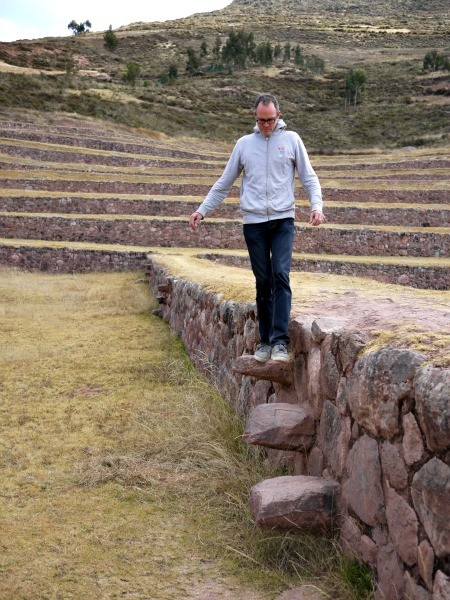
The Moray ruins are a series of agricultural terraces carved out in symmetrical, round forms. The depth between the center of the ruins and the uppermost levels can create a temperature difference of up to 15 degrees Celsius, so it’s thought that the area was used to test crops in different microclimates.

After getting to see our most-wanted sites, we were happy to head north again, and back towards the coast. We were finally on our way back to our home, the ocean! We made a pit stop of a couple of days in Lima to satisfy our craving for world-class international food, including fusion Peruvian cuisine, burritos and ice cream. Then we headed further north along the coast.
A funny thing happened to us on the way — actually, a couple of funny things.
First: a few hours after leaving Lima, we had our first encounter with corrupt road police, which other overlanders had warned us about. We’d heard that the worst ones were north of Lima. Miraculously, through all of our driving south of Lima up to the Chilean border, we’d been stopped dozens of times for road checks but never asked for money. This time, we were stopped by a policeman who tried to fool us into thinking that the kind of insurance we had (private vehicle insurance) didn’t match our license plate (happens to be a plate allowing use of the car for transporting goods). We knew he was bluffing, but we decided to pretend we didn’t speak Spanish. Friends had told us this would make them lose their patience, and they would most likely let us drive away. The cop kept saying he was going to give us a ticket for a 300 soles fine (about $70 US), but we could just pay him 30% of this and he would let us go. We went on pretending to not understand him for ten minutes, and then we remembered a piece of paper an overlanding Swiss couple had given us months before, that we kept in our glove compartment. It’s a completely fake, made-up form with the European Union flag on it, and spaces to fill out the police officer’s name, the nature and amount of the fine, etc. We showed it to the policeman and said in broken Spanish that our embassy needed us to fill out the form if we were to pay any fines, and the cop immediately dropped his requests for money and sent us on our way. The flag on the fake form didn’t even match our passports, which we’d already shown him.
Second: the same day as the corrupt cop incident, we were heading to a beach called Playa Centinela, to camp at a hotel we’d heard was located in front of a point break. We arrived in the adjacent small town right before sunset, and headed out onto a dirt road toward the beach. We came upon a big puddle and, not knowing how deep it was at the deepest point, decided not to risk getting stuck, and headed back to town. We drove away from the puddle in reverse, right into an irrigation ditch! Both wheels on the passenger side were in the ditch, and walled in front and back by the road. We couldn’t just push the car out, or use blocks to get it out, since the wheels were too deep and walled in.
There was a small field next to us, full of cows and donkeys. We went over to the field and asked a guy with a pickup truck to help pull us out. He said his truck wasn’t strong enough, so he called the police to come help us. We waited about half an hour for the police, and in this time, a group of fifteen villagers had gathered and everyone had an opinion about what to do. One of them was driving a cab, and tried to pull us out backwards, but our muffler was stuck in the mud and we didn’t want to break it. The cops finally came, and we decided to have some of the people push the passenger side up so it was level, and then have the cops tow us out from the front. It worked! Everyone cheered.

Villagers lending a hand
The villagers joked about us buying them all a case of beer; we told them of course we would buy them all beer. They led us to a small store in the tiny, dirt-road village; them on foot and us driving behind. Even the cops came. When we got out of the car, someone told us, “Some of us don’t want beer, we’re all brothers of the church and we don’t drink.” We were thinking, oh no, they want money instead. But then I asked them, “What would you prefer, juice?” They thought for a minute, and then said, “Soft drinks!” So we bought a bunch of three-liter soft drinks for them all, including the cops, and stood around outside the store drinking with them.
One of the guys had a friend who happened to work at the hotel on the beach we’d been trying to find before we got stuck, and he was going out there right that minute. He led us out to the hotel, through the puddle that we’d turned away from, which ended up being no more than five inches deep. We stayed at the hotel, Fundo Centinela, and surfed a fun, completely empty point break for three days. We were the only guests, and we hung out and ate all our meals with the owner and his wife and son. They made us amazing ceviche, and a tasty pollo estofado. It was an adventure getting there, and a truly unique experience staying at the Fundo.


La familia Fundo Centinela: Elisabeth, Daniel and Pedro
After all that driving and (mis)adventure, we were ready for some serious relaxation. A little over one week ago, we arrived in Puerto Malabrigo, home to one of the longest waves in the world. A big swell started coming in today, and we’re happy as clams. We’ve been surfing the longest waves of our lives, reading, and getting to know the owner of the hotel, Juan, who made us a very delicious ceviche. Good waves, good food, and good company. What more could we want?


Waves like this every day, with only a few other surfers!
Berenjenita SOLD in September!
We sold Little B on Sept. 5th to another adventurer. She will be missed but she’s in good hands.
We are sad to post this ad, but according to US emissions limits, we aren’t allowed to import Berenjenita back to the States when we return home. Our loss will be some traveller’s luck: Little B will be up for sale when it’s time for us to move on in September 2012. See the ad here.
The Second-Grandest Canyon
The day before we took leave from our adoptive family in Moquegua, the two kids, Maria Fernanda and Jhonatan, gave us a surprise farewell gift by washing Berenjenita while we weren’t looking.

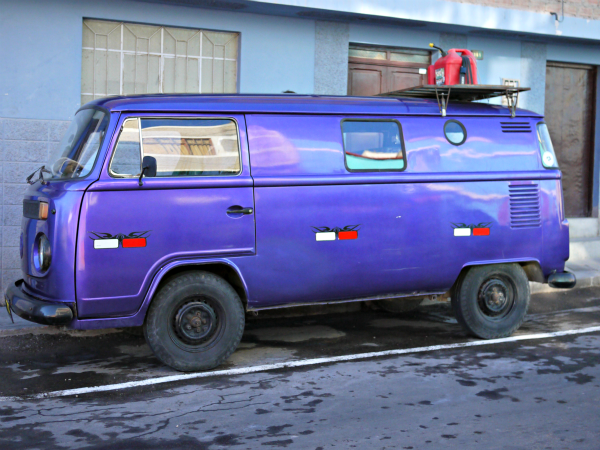
Berenjenita hasn’t looked this clean since we left Lima!
We took a sunset stroll with Maria Fernanda after the car washing, to a lookout point over Moquegua, and tested the swinging wooden bridge just for thrills.

The next day, we made it to Arequipa, Peru’s second largest city. Arequipa is known for its signature dishes of rocoto relleno, a spicy pepper stuffed with minced meat, vegetables and sauce, which is normally served with pastel de papas, a kind of scalloped potato dish that satisfied my mac and cheese cravings:
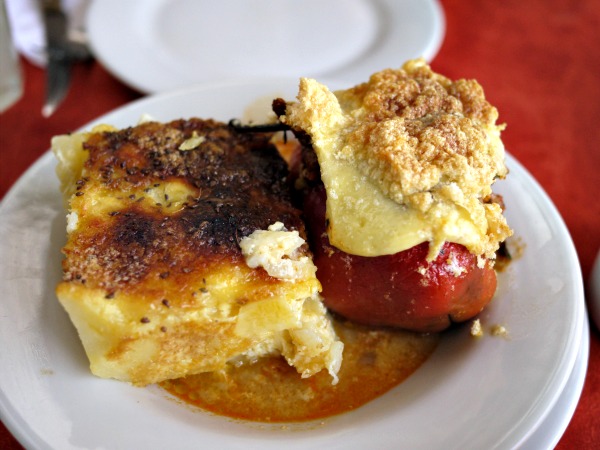
And cuy chactado, deep fried guinea pig:

The city has a picturesque Plaza de Armas with a lovely cathedral on one side, and pretty, cobblestoned streets lined with colonial buildings.


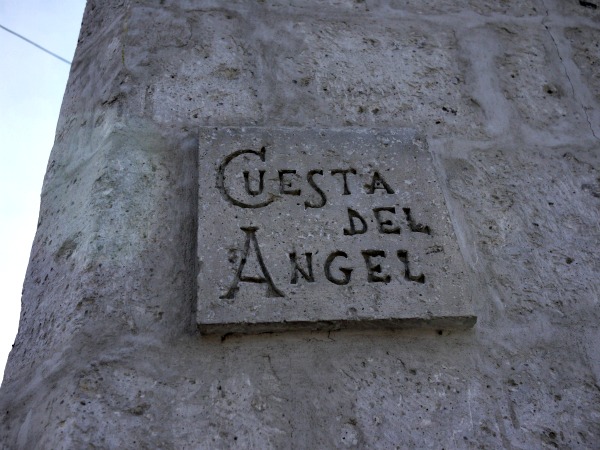

The Volcan Misti looms above the city.

Arequipa is a short drive from the Colca Canyon, the second deepest canyon in the world (more than twice as deep as the Grand Canyon!). That is, it’s a short drive if you take the normal, paved route from Arequipa to the town of Cabanaconde. We had heard from other overlanders that you could take a back route to Cabanaconde and avoid paying the $24-per-person entrance fee. We neglected to research the route sufficiently before setting out, and found ourselves on a gravelly, unpaved, washboard road an hour after leaving Arequipa. Much of the way was uphill, climbing from 8,000 feet to 16,000 feet at the highest point, and it took us a full 7 hours to drive the 200 km to our destination. The last two hours, we were driving in the dark, which is something we try to avoid at all times. There’s a myriad of nighttime driving hazards in South America, ranging from herds of black cows hanging out all over the road; to people leaving big rocks as hazard warnings in the middle of the road when their cars break down and then failing to remove them once they leave the scene; to crazily caffeinated bus drivers who pass on blind curves. Luckily, the road we took was very lightly travelled, so we only had to deal with the cows and the rocks in the middle of the road. We finally made it to the canyon in the pitch black with an extra five pounds of dust on and in our van.
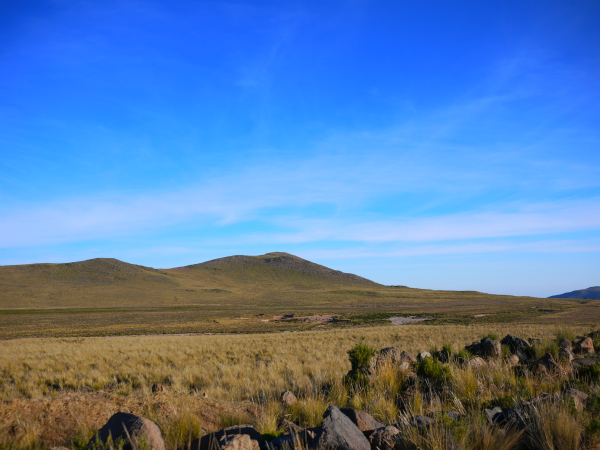
The Colca Canyon is full of wide open spaces – sometimes we felt like we were in the steppes of Mongolia:
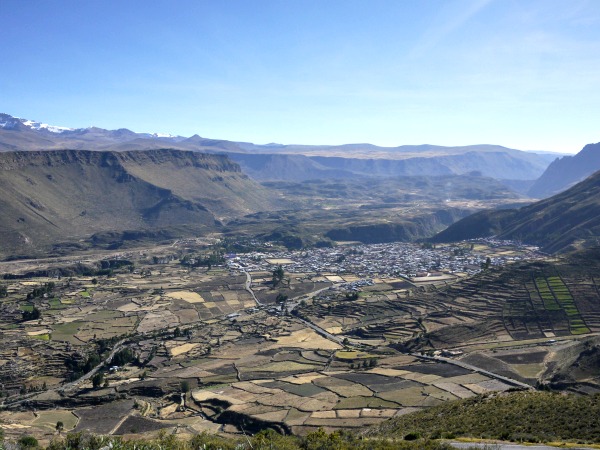
deep green valleys:
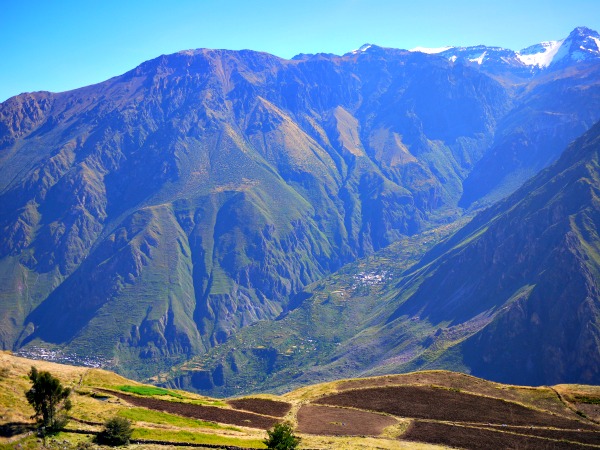
snow-capped peaks:
bracingly cold, fresh air:

intricate Incan agricultural terraces:

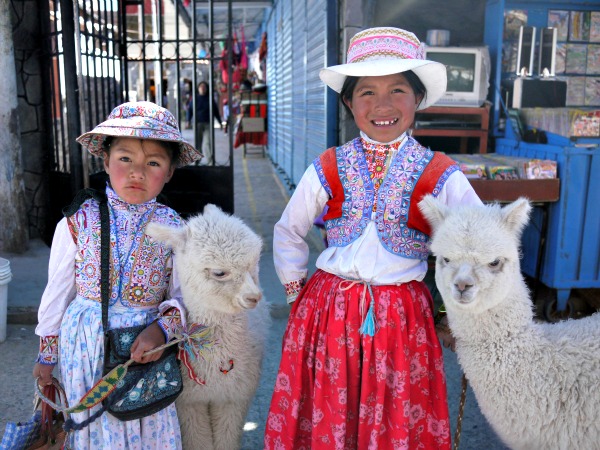
and villagers walking around with their alpacas:
A few other interesting wild animals that can be seen in the area are giant hummingbirds, vicuñas (wild alpacas), Andean condors (boasting the largest wingspan of all land birds) and viscachas (high-altitude rabbit-type rodents with long tails). We saw a lot of domestic sheep, donkeys and llamas as well.

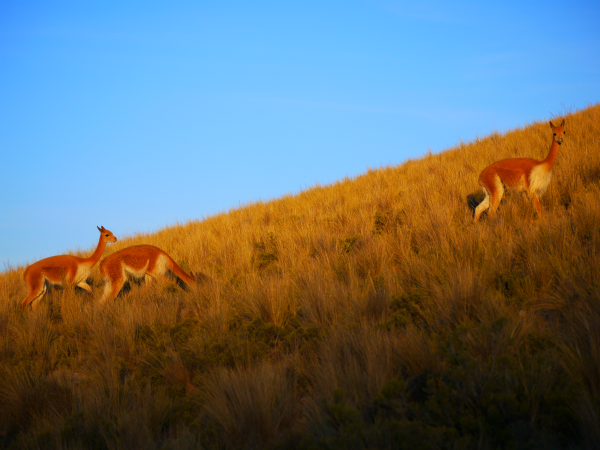
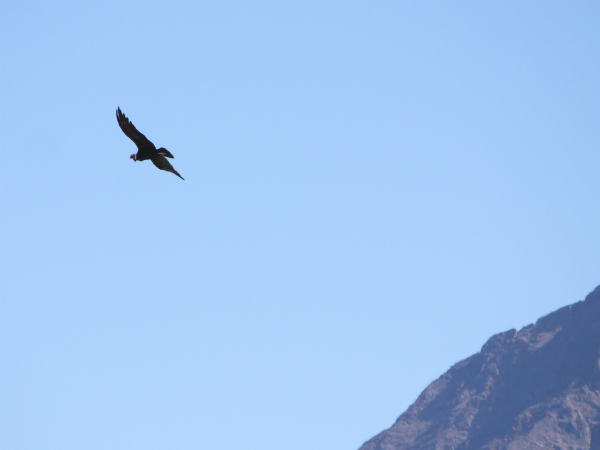
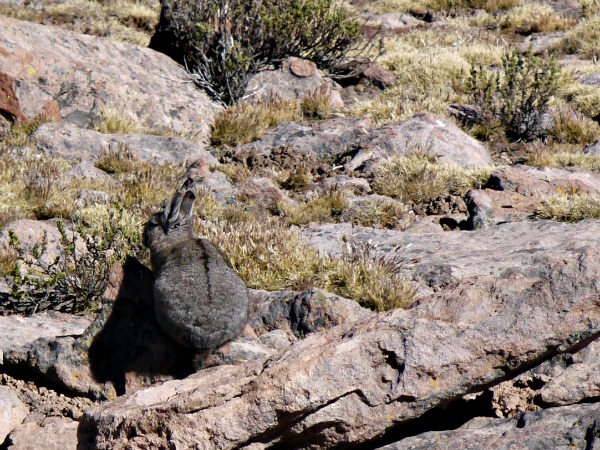


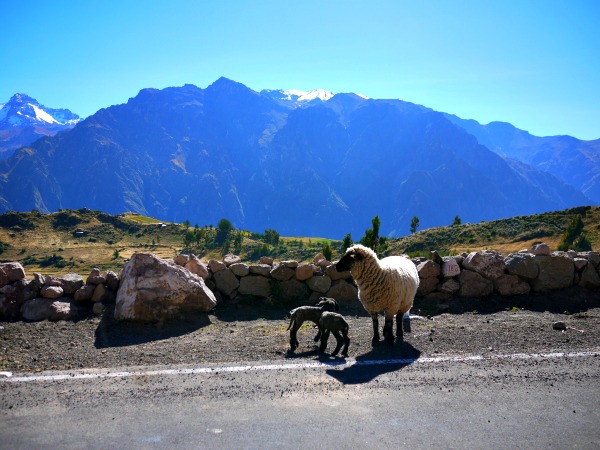
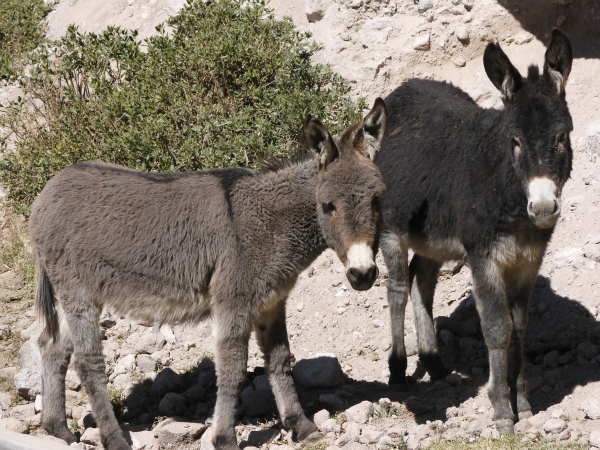
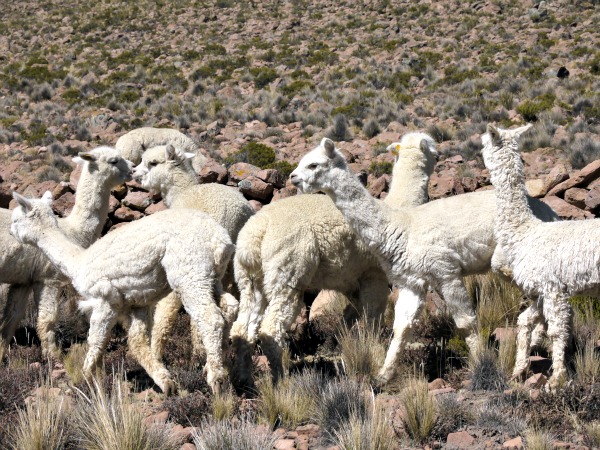
The nights are cold up here, so it’s easy to forget that it’s summertime back home. We’ve started using two duvets at night. Next up, we’re looking forward to visiting Lake Titicaca, the world’s highest-altitude lake, with floating villages on islands woven out of reeds, and Macchu Picchu — one of the New7Wonders of the World, and a lifelong dream for me.
No matter where we are, though, we still miss the ocean. It’s been several weeks that we’ve been far from waves, and every time we catch our breath at the beauty of the landscape around us, we can’t help thinking how much more perfect these places would be if they were located right beside a surf break.
Getting To Know The Locals
We left La Serena, Chile, after Manuel had changed the piston rings. The car seemed OK, but shortly after we left La Serena, we noticed there was a new chugging noise when we accelerated, and the car started stalling every time we came to a stop in the street.
Our next surfing pit stop was a small village called Portofino, which is full of vacationers during the summer, but during fall and winter (we are currently in Chile’s fall season), it’s a ghost town. We were checking the waves coming off the point when we were approached by another guy checking out the point, and his two companions.
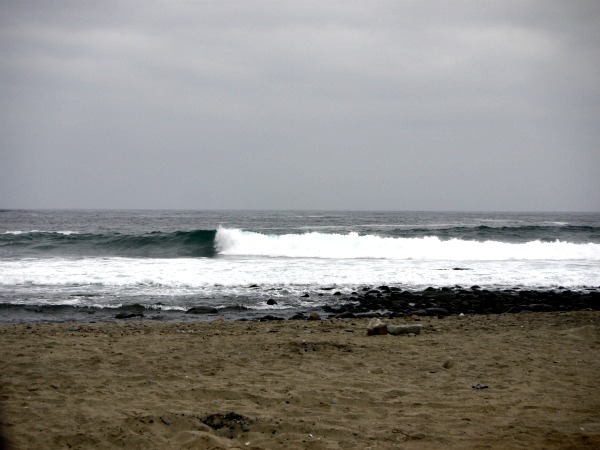
The point at Portofino
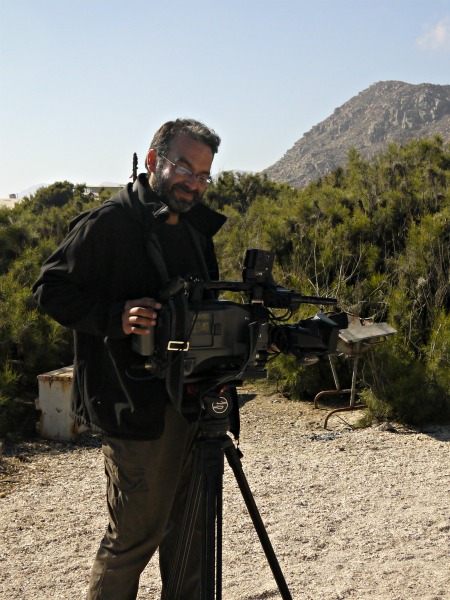
He turned out to be the only year-round resident of Portofino, Cristian Ramos (aka Chico Cristian), and he happened to be with two reporters from a national TV show called Chile Conectado, who were interviewing him about his interesting way of life at Portofino. Cristian surfs Portofino all year and lives off the grid, using solar panels. We surfed with Cristian that day (maybe even getting a speaking part on the TV program — we’ll see in a couple of weeks when it goes online!), and he and his good friend Mauro invited us to barbecue with them that evening. We had a fun time chatting, eating and watching a Chilean surf movie together.
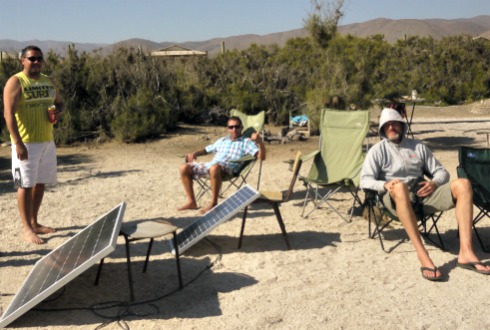
Mauro, Cristian and Michael relaxing in the sun
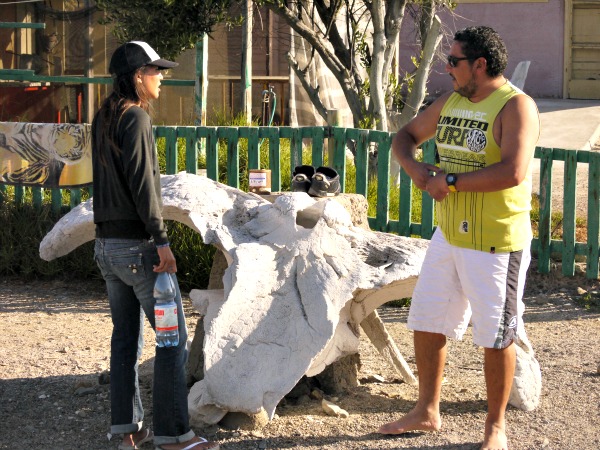
Me, Mauro and a giant whale vertebra
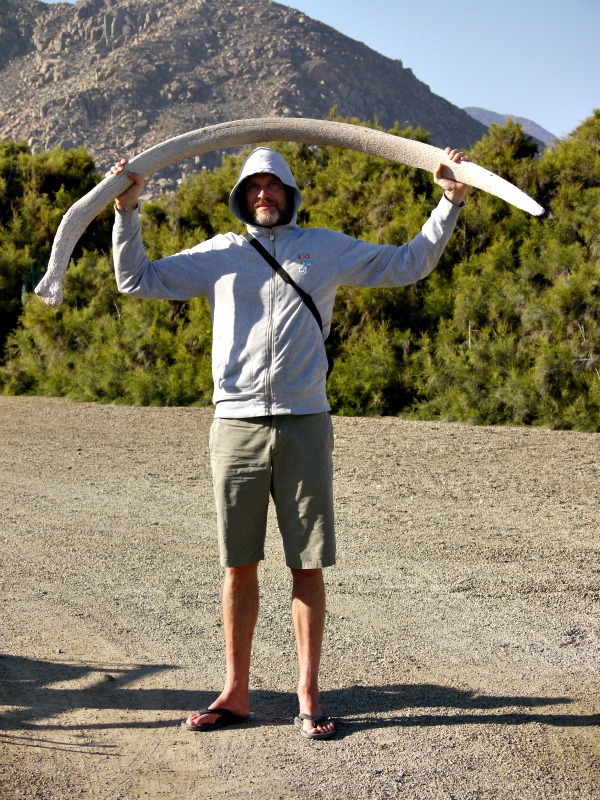
Michael and a giant whale rib
The next day, it was off to Antofagasta, a mining city on the coast. We ended up staying there for 5 days, looking for a good VW mechanic to help us with the small problems Berenjenita was having since we’d left Manuel’s in La Serena. In Antofagasta, we randomly met a friendly dude named Carlos, who works in the mining industry, while we were using the wi-fi at a gas station. Carlos had just moved to Antofagasta from Iquique, which is further north, and he gave us the advice to drive to Iquique to see a mechanic there, since Antofagasta is much more expensive because of all the mining industry money. We decided to take his advice, and the contact information of a good VW mechanic in Iquique that he gave us, and head north the following day.
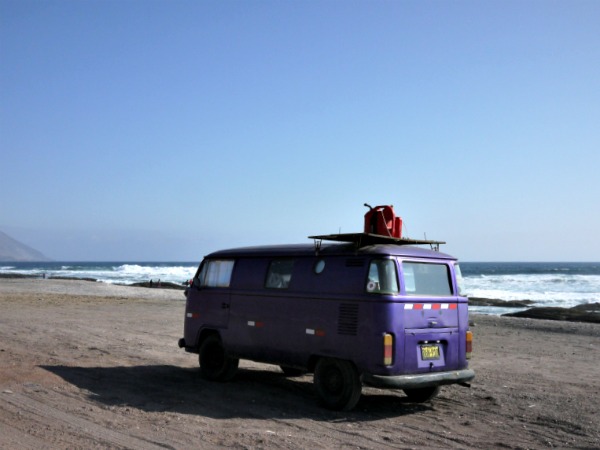
Camping on the beach in Antofagasta
That same evening, the day before we were going to drive north, we started talking to a local guy in the street who asked us if we were surfers after seeing our surfboards in the van. His nickname is Coka; by day, he’s a Coca-Cola distributor, and by night, he’s Antofagasta’s only surfboard shaper. Coka was excited to show us his workshop. We shared a beer, he gave us a tour of his shaping and glassing studios, and we hung out and talked about Chilean surfing with him.
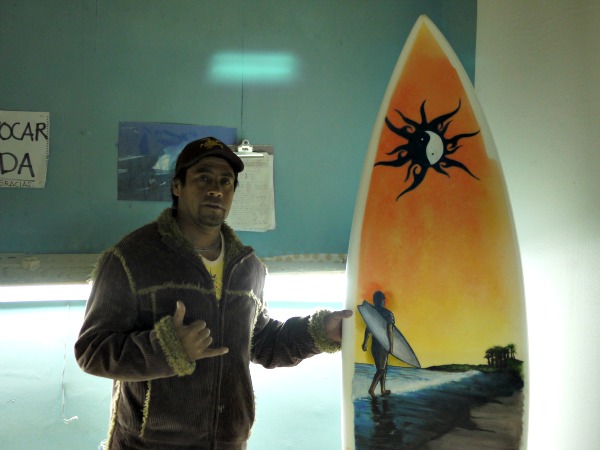
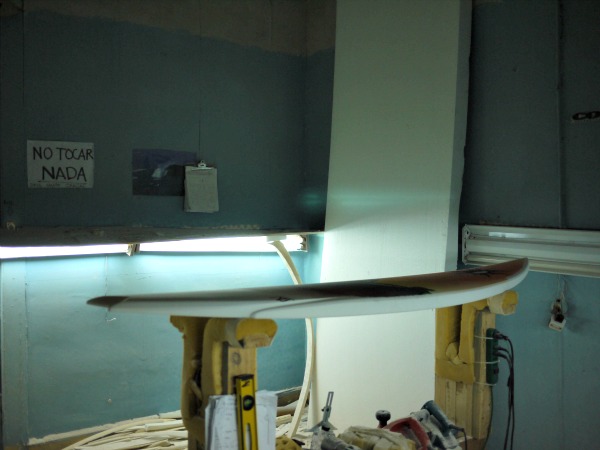
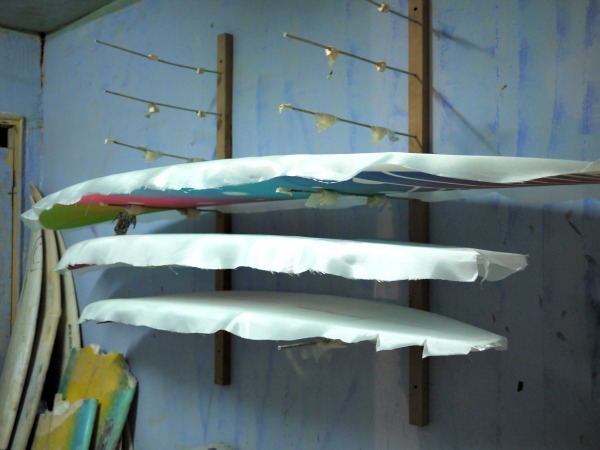
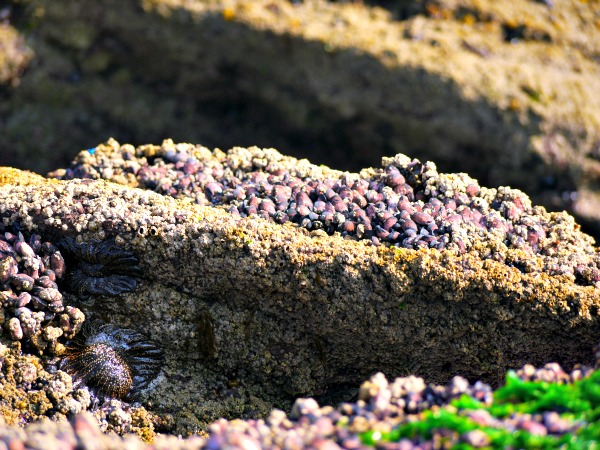
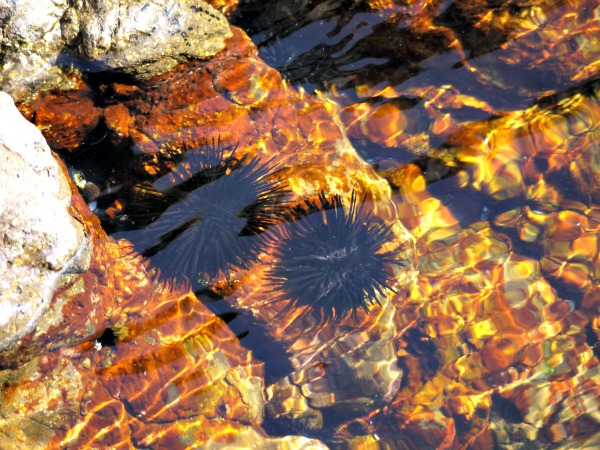
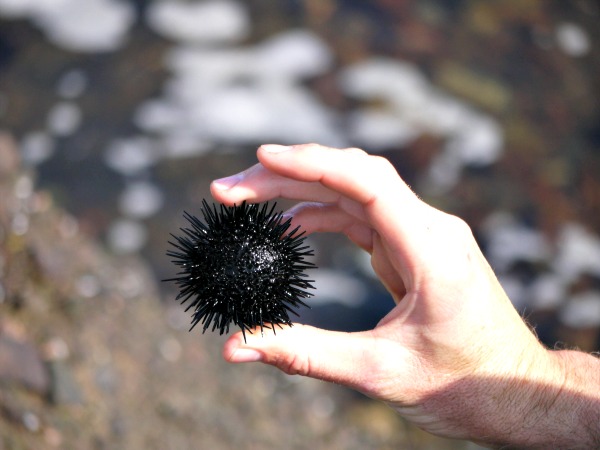
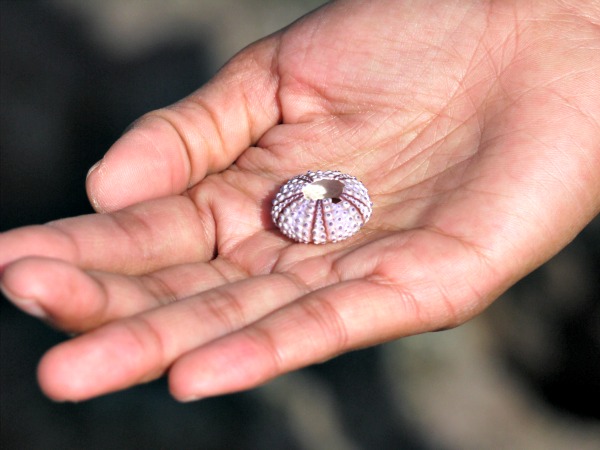
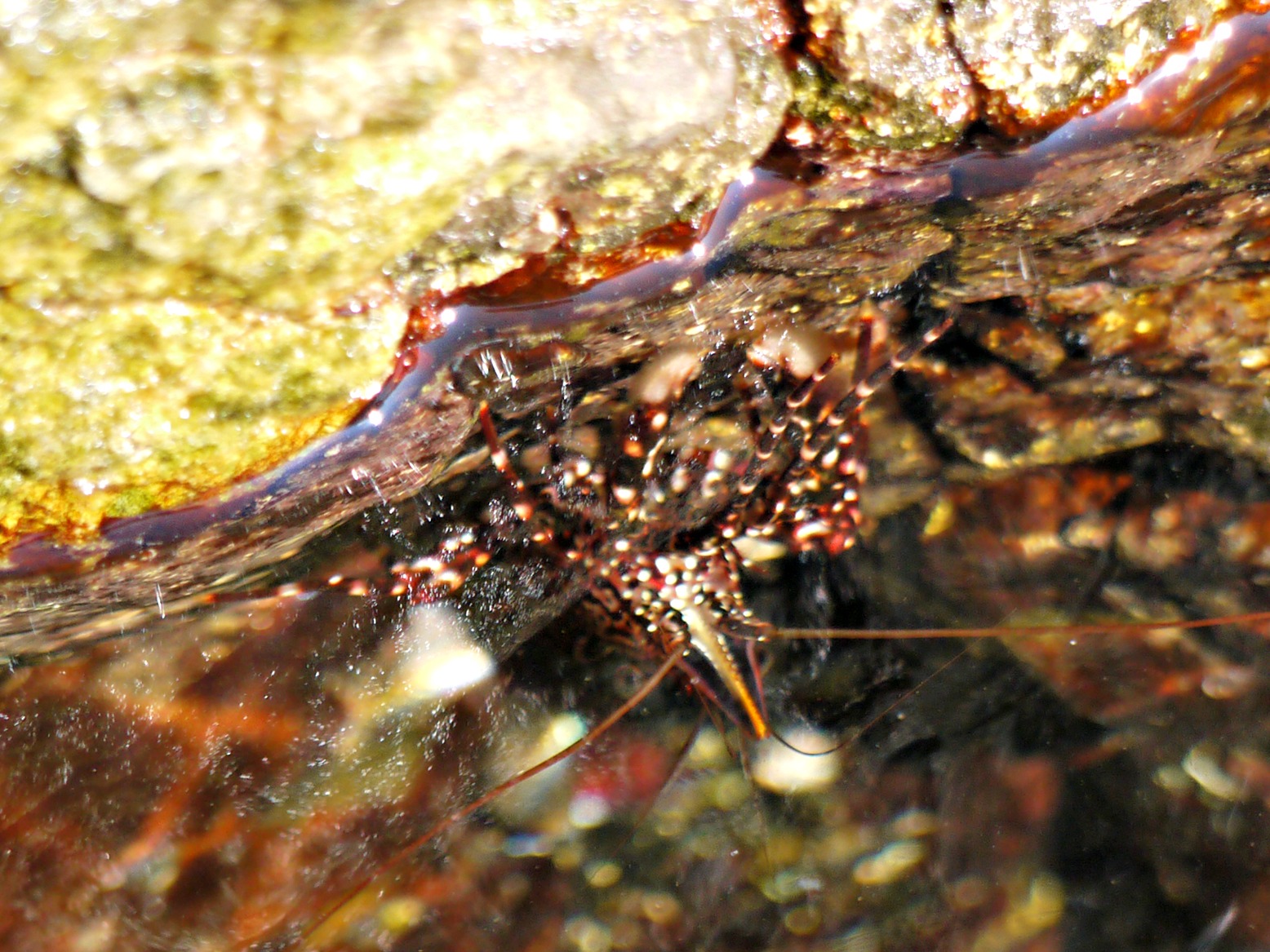
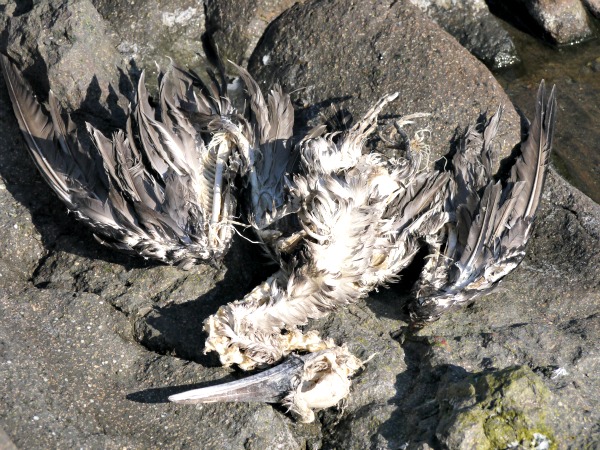
He drew us a map of all the good surfing areas, including secret spots, within 45 minutes south and north of the town. If only we’d met him at the beginning of our stay in Antofagasta! We didn’t get to surf there, but we did do a lot of tide-pooling right in front of where we parked and slept on the beach. Here are a few of the sea-dwelling beasties we stumbled upon:
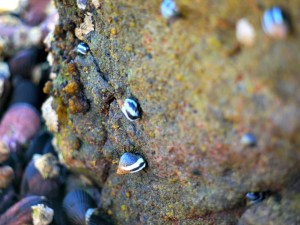
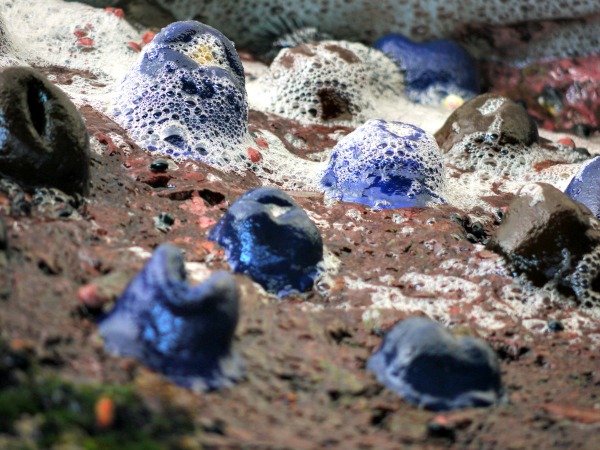
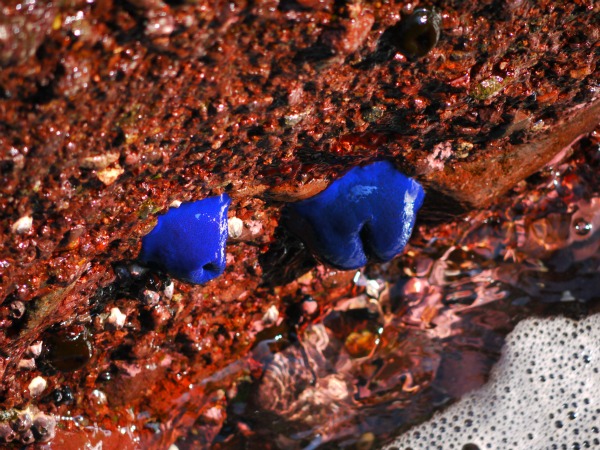
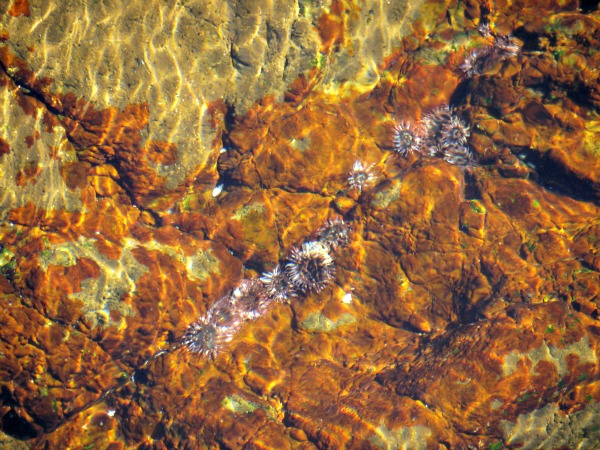
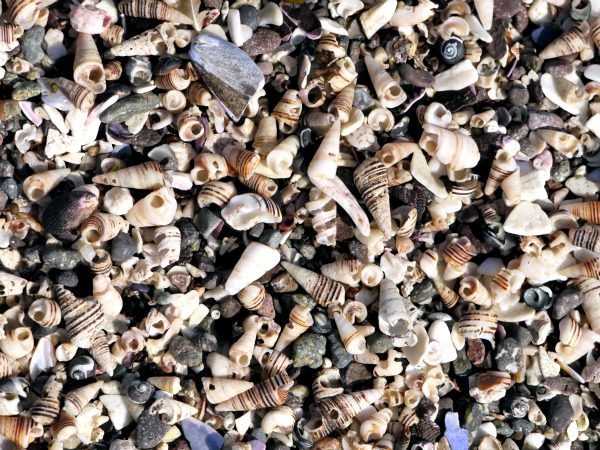
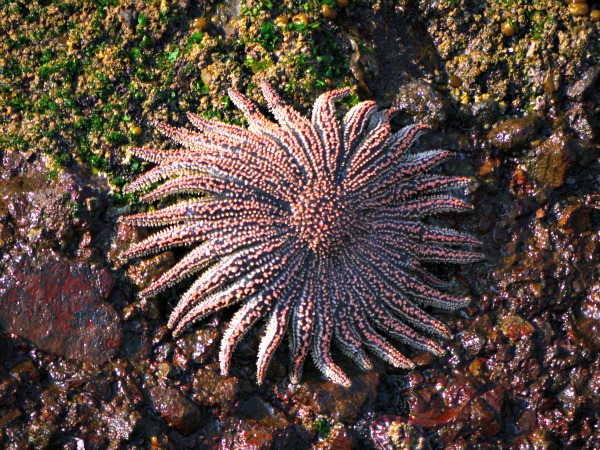
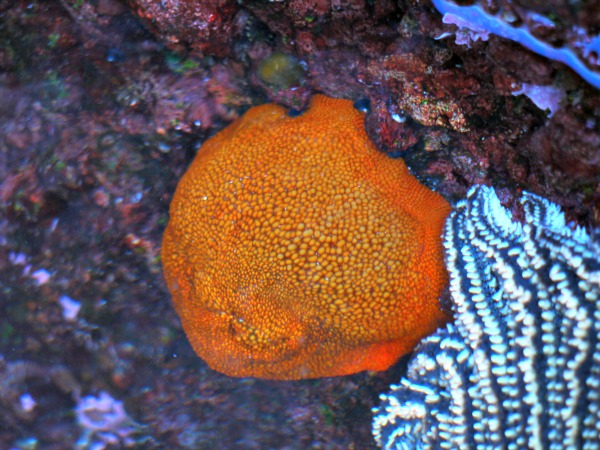
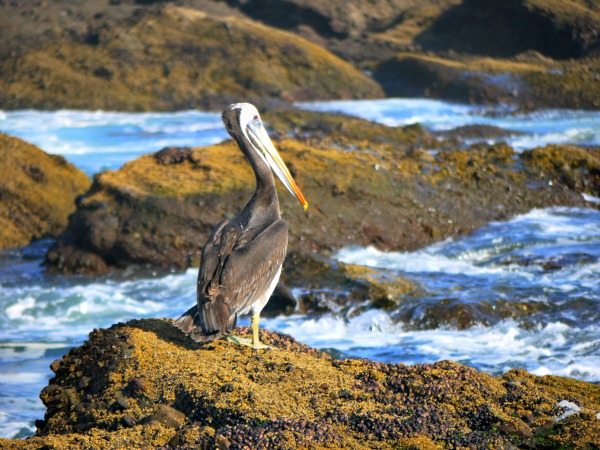
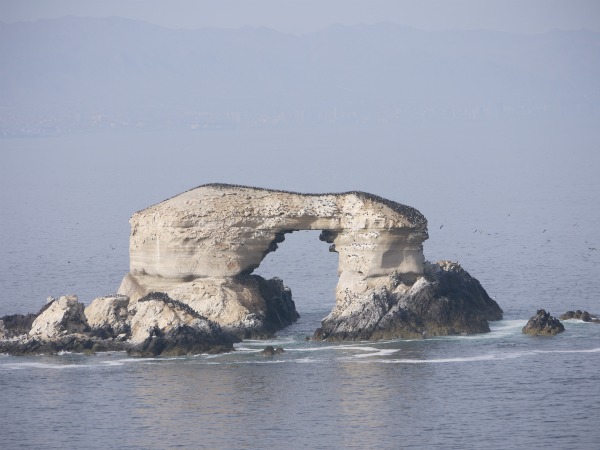
La Portada, one of Antofagasta’s natural wonders
Instead of staying to explore Antofagasta’s secret surf spots, we stuck to our plan to drive to Iquique the next day, since we’d arranged to meet up there with our friends Lacey and Luis from Lost World Expedition. We had a fun time seeing them again, doing up a true Chilean-style meat-and-potatoes barbecue before parting ways. We brought La Berenjenita to the VW mechanic that Carlos had recommended, named Jorge, and he was able to adjust our carburetor so that the car would no longer stall whenever we stopped at red lights or slowed down. He could also tell by the chugging noise, and our recounting of the work we’d had done in La Serena, that there was some wear in our engine block where the drive train rests, and that we would eventually need to have the block re-machined and some parts changed. But he thought we could make it to Cuzco and Lima, and he advised us to have the work done in Peru because it would be cheaper and faster, since there are way more VW kombis in Peru than in northern Chile. For anyone needing a Volkswagen mechanic in Iquique, we fully recommend Jorge Vera (something we can’t do for Manuel in La Serena, as we found out later that his work was incomplete and badly done, causing us more problems than he fixed).
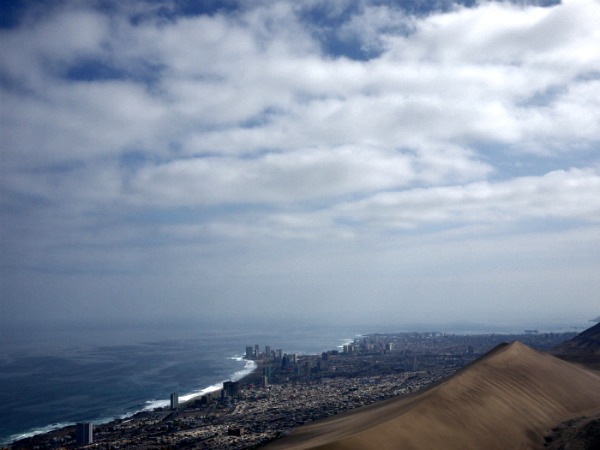
Iquique vista
From Iquique, we drove to Arica, a northern Chilean surfing town, and camped on the beach where we’d boondocked the first time we’d visited, about 2 months ago. We got to surf some fun beachbreak waves for one morning at Playa Las Machas. We headed out the day after we surfed, and crossed the border back into Peru. Our first planned overnight spot in Peru was a town in a valley in the middle of the desert called Moquegua. About 40 minutes before reaching Moquegua, a grinding noise starting coming out every time Michael shifted gears, and then 20 minutes before reaching the town, the grinding sound started happening more frequently. We just made it up into the area where we were going to camp that night when the grinding started sounding so bad that we knew we couldn’t drive further. We spent the evening looking online for a listing of VW mechanics in Moquegua, population 65,000. No luck.
The next morning, we decided to walk around the town and ask a few owners of the many VW Beetles we saw in the streets for a mechanic’s contact information. We had made it about 100 yards from our parking spot when we saw a Beetle in the lot of what looked like a military airport. We went into the yard, and it was actually a military flight school. They called for the school’s machinery mechanic, Gilmar, who then asked permission to leave from his colonel to help us out that day.
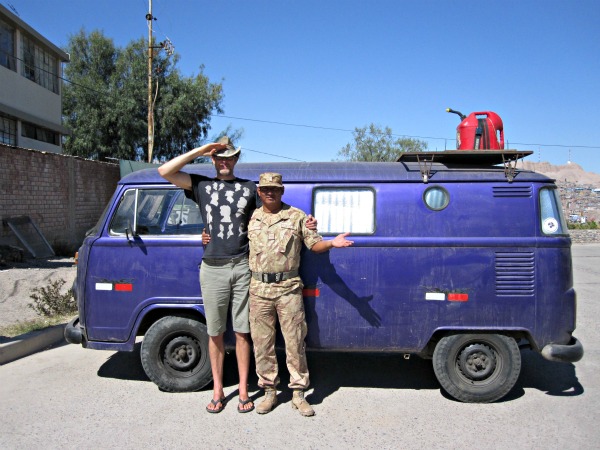
Gilmar called his friend Jesus, who knew a mechanic specializing in Volkswagens, and Jesus and his wife Margarita came to tow our car to the shop.
So now we are getting the work done on the engine block that should have been done the first time we’d had trouble, in La Serena, but it would likely have been much more expensive back in Chile. That terrible grinding noise? Our flywheel was loose and fell off while we were driving; it’s one of the several parts that we’ve now replaced. The mechanic will need a couple of more days to finish up the engine rebuilding.
In the meantime, we’ve been staying at Jesus and Margarita’s house. They’ve been so helpful and welcoming, and we’ve been having a lot of fun hanging out with them and their two teenage kids. We played a game of Monopolio (Spanish Family Game Night!):
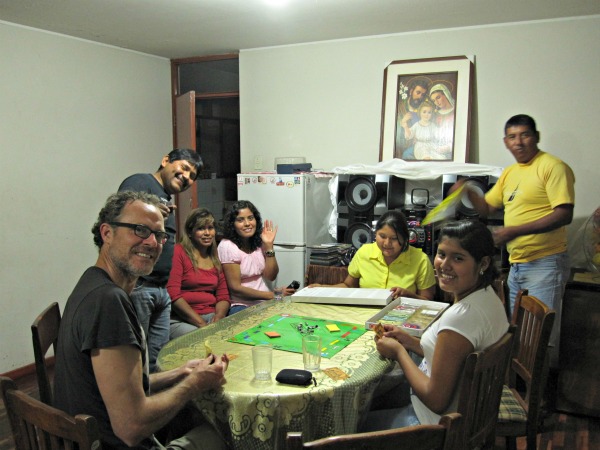
Clockwise from left: Michael, Jesus, Margarita, Gilmar’s wife Marlene, Jesus’s daughter Maria Fernanda, Gilmar, Gilmar’s daughter Alessandra
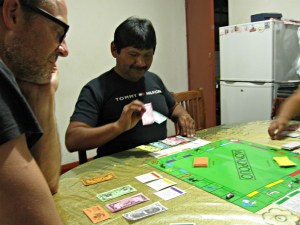
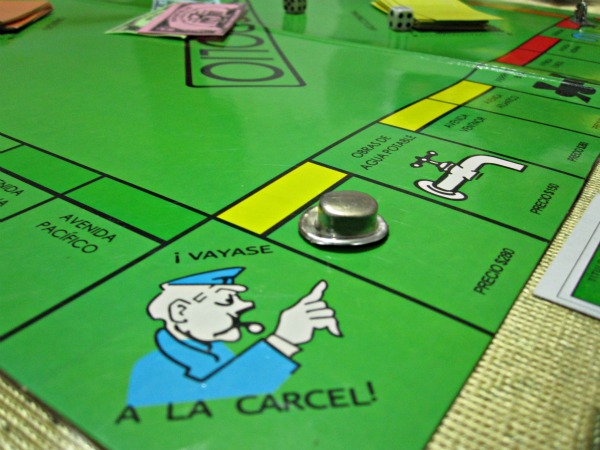
and spent an evening showing each others’ childhood and current homes on Google Earth:
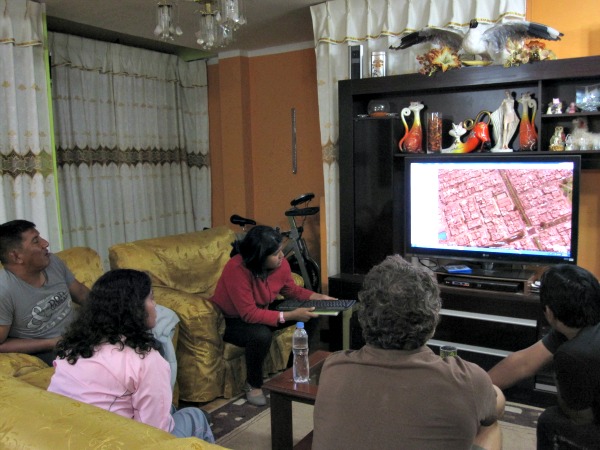
There’s something about this family that makes us feel very comfortable, as if they are our relatives. The culture of kindness and hospitality towards strangers is much more alive in Chile and Peru than we’d ever imagined possible. There may be parts of the U.S. or Canada where folks will take complete strangers into their homes, but I’ve never seen or heard of it happening firsthand. I think most people nowadays, especially city-dwellers, would be too cautious to invite strangers they meet on the street to stay in their homes. The kindness of the strangers we’ve met during our time so far in Chile and Peru – Chico Cristian, Miguel from Lima, Carlos from Antofa, Coka the surfboard shaper, and now Gilmar and Jesus and Margarita – has opened our eyes to what it really means to treat others as you would hope to be treated. My feeling is that in the U.S. and Canada, we’re a lot more guarded with our time, our energy and our possessions, and we tend to mistrust strangers until they’ve proven us wrong. Our experiences in South America have shown us that the opposite sentiment is prevalent in these cultures: share what you have, as tomorrow it may be yourself who needs help; trust in the kindness of strangers until they prove you wrong. Staying with Jesus and his family, we’re learning a lot more than how to speak Spanish.
Part Of The Process
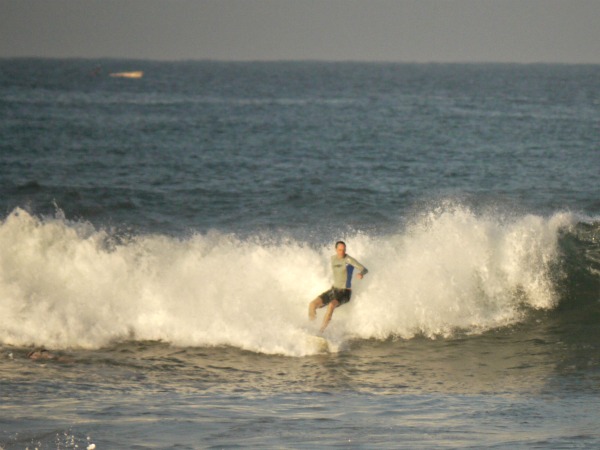
So far, we’ve posted several photos and sequences of us both surfing in various places. What we haven’t shown you are the photos of us wiping out. For every great ride we get, there are many wipeouts. But that’s all part of the process, right?
About to wipe out:

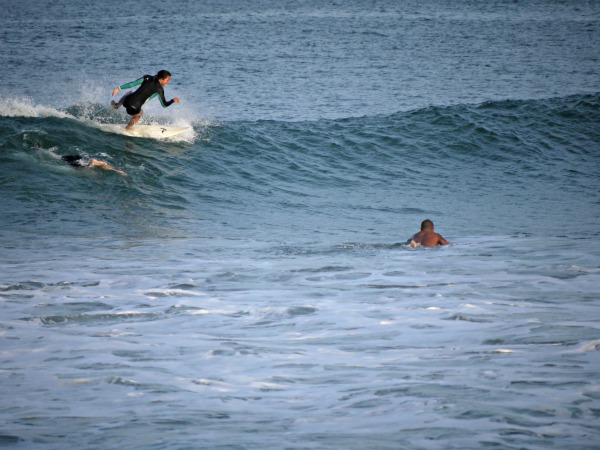
Wiping out proper:
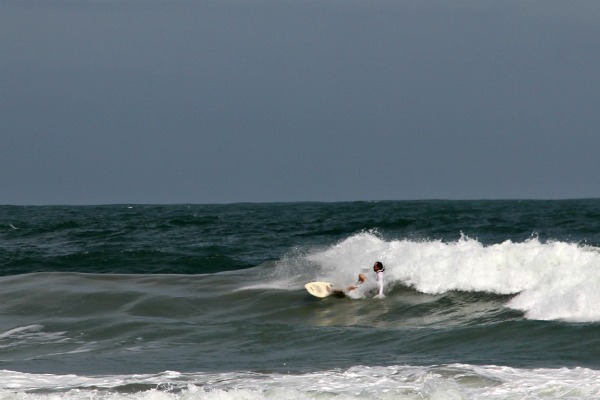

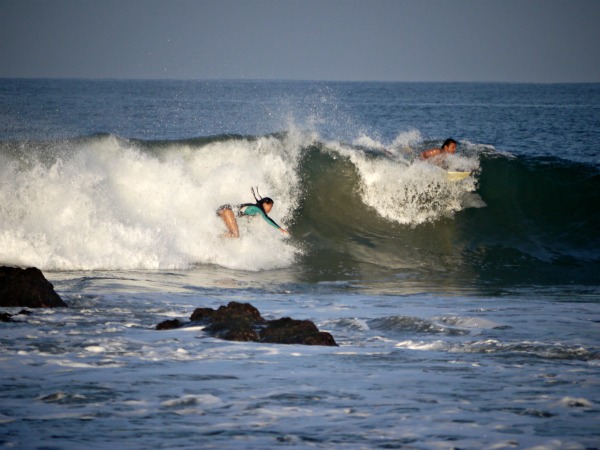
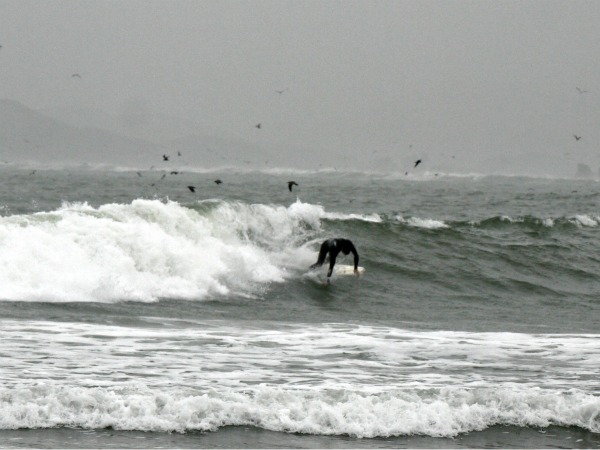
Maybe one of our funniest videos:
 It
It
How to buy a car in Peru
We received a few emails and messages through online forums from fellow travellers, asking what the process was to buy our car in Peru. I’ve posted a list of what we had to do to acquire La Berenjenita, in our “Resources” section.
If you’re interested in the reading the explicit details, head over here. Who knows — maybe you’ll be the one buying La Berenjenita when she’s up for sale in September!

Hitting the surfing jackpot
The waves in Punta de Lobos were among the biggest I’ve surfed in my life.

The power behind all that moving water, the rocks and the giant seaweed, the currents, even the way you paddle out — by swimming across a churning channel of water with waves battering the rocks that serve to protect you from the whitewater, using the kelp to pull yourself up onto a flat bed of rock between two stone giants, and waiting for a good long lull between waves before paddling as fast as you can to make it out past where they break — is intimidating. Some waves ended up tumbling every single surfer duckdiving in the lineup, they were that powerful.
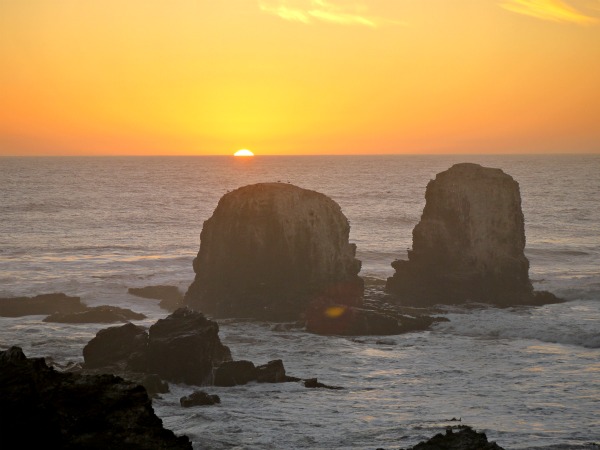
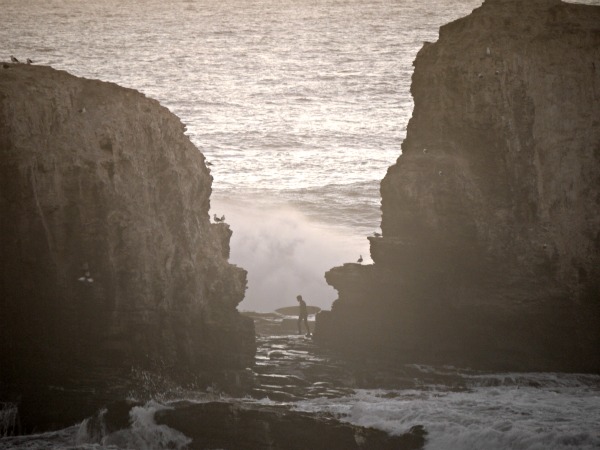

Someone about to undertake the rock jump
We stayed at Punta de Lobos for a little over two weeks before driving south to explore the many breaks that we had heard of through word of mouth. The surfers in Chile are very friendly, generously sharing waves with us, as well as giving us detailed directions on how to get to some of the best waves in the country. We weren’t sure what to expect, since we had never heard of most of the waves south of Punta de Lobos before arriving in Chile, but so many locals had told us that we had to check out this or that spot. It was the best kind of travel: we headed out with some directions we’d scratched out while talking to different locals, a map, and no expectations.
What we found blew our minds: point break after point break, with waves that ranged from head high to double overhead, and all of them so perfect that they made us feel like we were surfing at the highest level we’d ever surfed before.


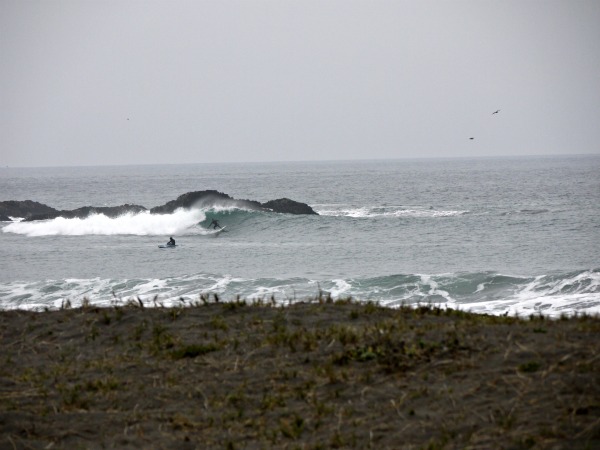


We couldn’t believe this wave was empty!


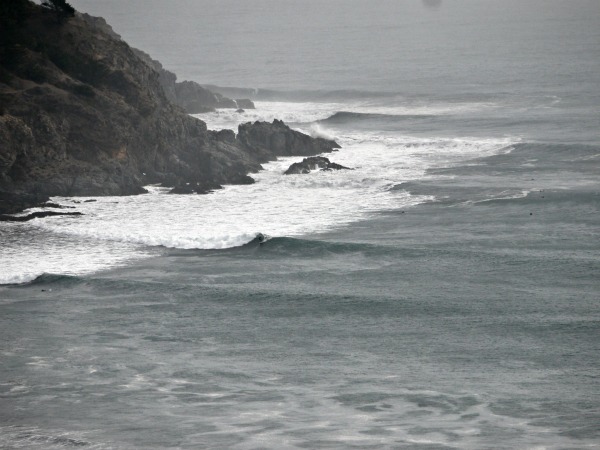
We boondocked sometimes in oceanfront parking lots on the outskirts of towns, sometimes in the middle of nowhere, but always in view of incredible point breaks. We lucked out with the weather, not getting one day of rain, although the rainy season down south was supposed to have been starting. We got a few cold, cloudy days, but many more warm, sunny ones. We got lots and lots of perfect waves. I still can’t believe how many amazing point breaks there are, and so close together. The locals were few and friendly. We kept pinching ourselves, marvelling at how lucky we were the whole time.
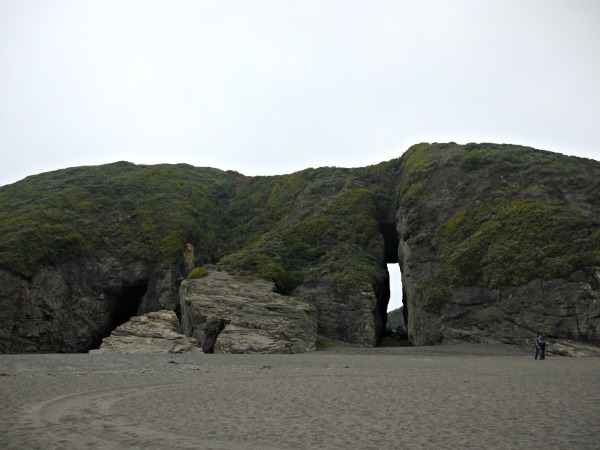
We spent several weeks exploring up and down the coast, surfing until our arms hurt so much it was sometimes difficult to fall asleep, and stopping to look at some natural wonders, such as the Iglesia de Piedra, a cathedral-like formation of caves:


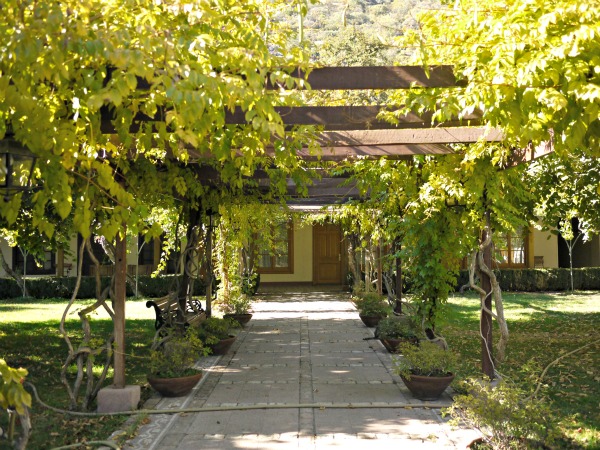
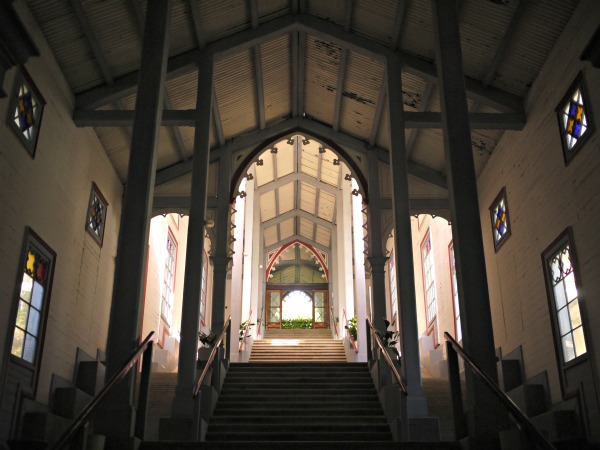
We also visited some old, atmospheric hot springs baths that were built in 1876, the Termas de Cauquenes, for a relaxing soak.

We were sleeping in our van outside the hot springs, when we felt a gentle but persistent shaking of the entire vehicle. Michael thought I was moving around in my sleep, but then realized it was an earthquake. It was a 6.7 magnitude earthquake that had been centered near Valparaiso. Luckily, we were far enough away that it wasn’t dangerous for us at all. We were happy to later hear that there were no immediately related deaths close to the epicenter.
On our way north again, we passed back through Pichilemu for a short stay, to surf Punta de Lobos one last time, and eat our favorite oven-baked empanadas at El Quincho del Ross. Most empanadas in Chile are fried, and oven-baked ones are slightly healthier version that are harder to find:

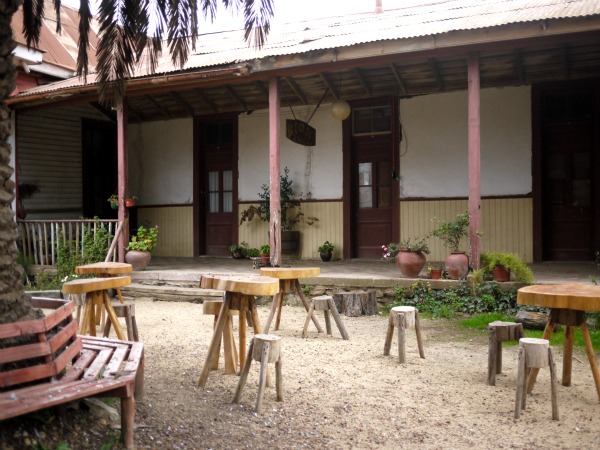

After gorging ourselves on all those perfect point break waves along the coast around Pichilemu, we stopped in Valparaiso for a couple of days, a beautiful, bohemian port city with colorful houses and mansions perched atop several hills. We saw La Sebastiana, Pablo Neruda’s house with breathtaking views down onto the city:

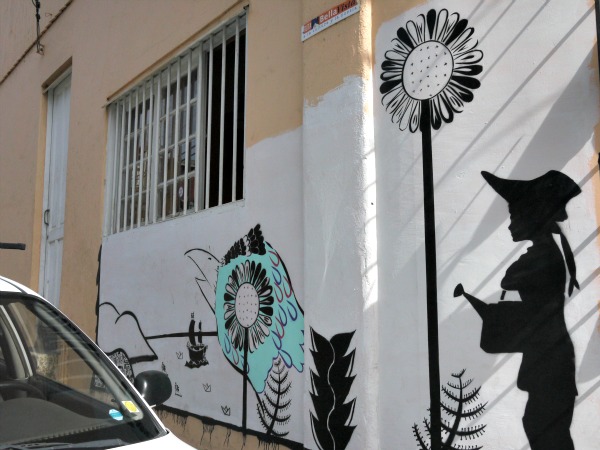
And countless walls filled with interesting graffiti:



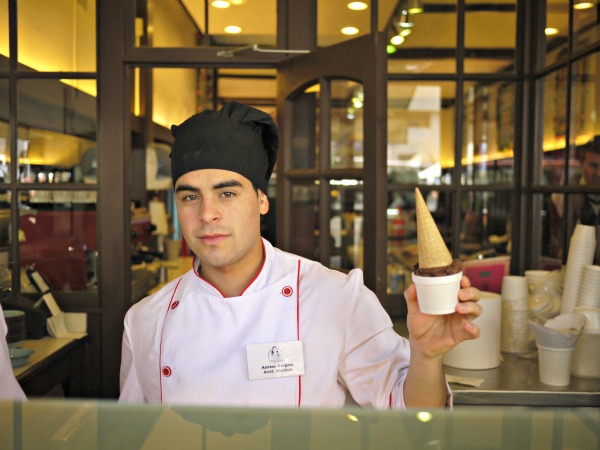
Of course, since Valpo is a good-sized city, our ice cream radars led us to a cafe that serves some of Chile’s best ice cream, Emporio La Rosa. Among their tasty and creative flavors are Chocolate-Chili Pepper, Raspberry-Mint, and Orange-Ginger.

We also happened upon one of the most delicious and best-value menu del dia lunches of our whole trip so far, at a restaurant called Sabor Color. It was a three-course gourmet meal that was impeccably done, from the presentation to the flavors. We couldn’t have found better for the equivalent of $9 per person.

We drove further north, back to La Serena, where we got to surf a long, fun head-high beachbreak for one afternoon before discovering that La Berenjenita needed some work. She was leaking and burning oil. We took her to Manuel, a mechanic in La Serena that a friend from Pichilemu had recommended. Manuel’s been working on old VW beetles and vans for 20 years. He took La Berenjenita’s engine apart, cleaning and checking each area, and found that we needed to replace the piston rings in the cylinders, which requires ordering parts from Santiago.
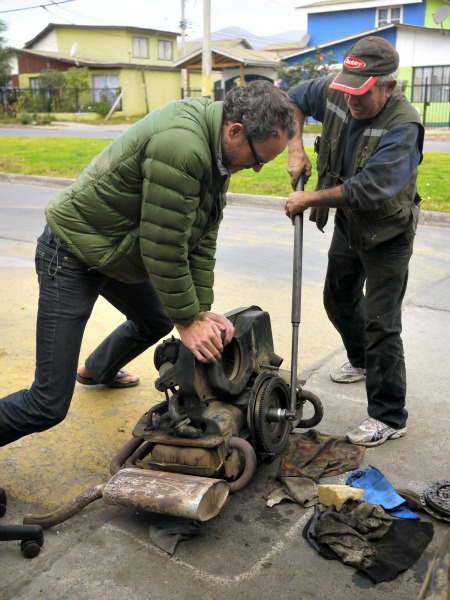

Berenjenita’s engine, after being cleaned and painted to look like new
Manuel invited us to stay at his house for the three days it will take to order and receive the parts. We’re sleeping in our van outside his house, and he and his wife Boli cook us a big lunch every day. He treats us like his kids, and it’s pretty cool getting a genuine Chilean homestay experience, not to mention the fact that Manuel takes the time to explain every detail of what he sees and what needs fixing. We’re learning a lot about our little purple eggplant van.

The new parts should arrive tomorrow, and with luck, we will drive out of La Serena with La Berenjenita feeling better than ever, and ready to brave the roads towards our next destination, which is off the coast and at altitude: San Pedro de Atacama.
On The Road
We haven’t posted anything in such a long time, although there’s been no shortage of adventures to write about. Following are just a few of the places, things and people we’ve seen over the past month. One month on road, and so far so great!
Two days before leaving Lima in our newly built-out van, we met up with Kaori, a friend from New York, with whom I used to work at my last job. By coincidence, Kaori’s taking some time off from her New York life and career to do some extended travelling right now in Peru and Chile. It was a treat to meet up with her and hang out with a familiar friend. She came to the beach with us while we did a surf session, and we later went for lunch at an amazing restaurant that specializes in the Peruvian dish causa.

Causa is made by layering mashed potatoes (traditionally, the Peruvian yellow potato) with fillings such as crab meat, chicken salad or vegetables, and it’s normally served cold. The restaurant we visited, Cesar, has over twenty different varieties of causa on the menu, and we shared three different ones. They were all delicious.
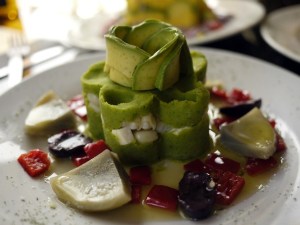

Cesar Ugarte, the owner, used to play basketball for the Peruvian Olympic team, before going on to become a fashion accessories designer in Switzerland, and later moved on to opening restaurants in Lima.
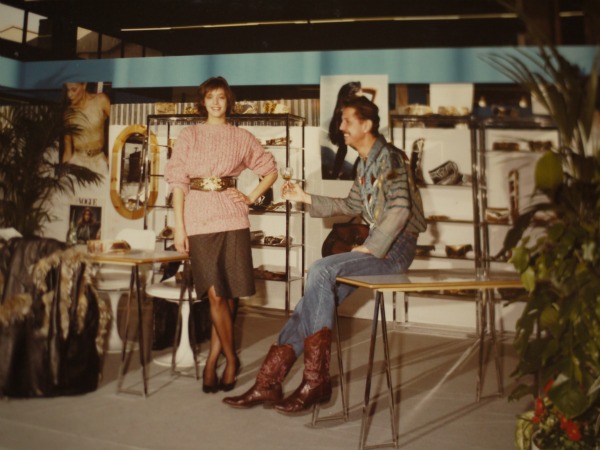
Cesar at a fashion trade show in his designer days
Cesar’s almost as tall as Michael!

We ended up having more errands to run in Lima than originally estimated before heading south, so we stayed an extra day, and that gave us one more free evening to check out the attraction we’d most wanted to see: the Magic Water Circuit in Parque De La Reserva. It’s a huge park filled with more than a dozen different water fountains, some of them interactive, and there’s a laser projection musical show that occurs every night. We went there with Lacey and Luis from Lost World Expedition, and had a blast running through the arcs of water and watching the over-the-top laser light show. It was like something you’d see in Las Vegas.

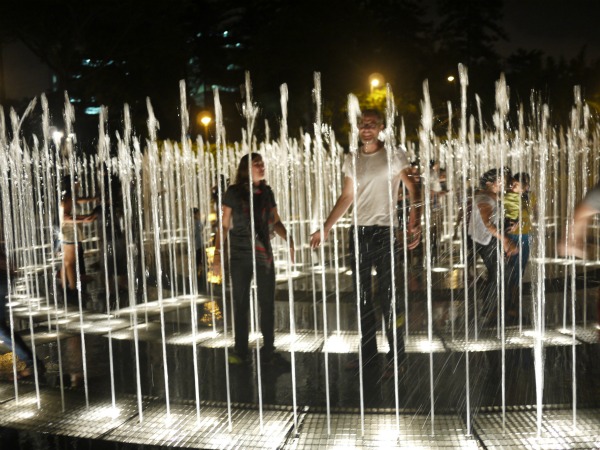

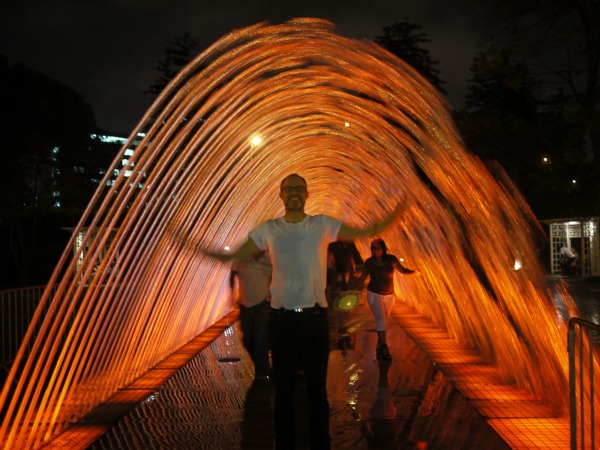
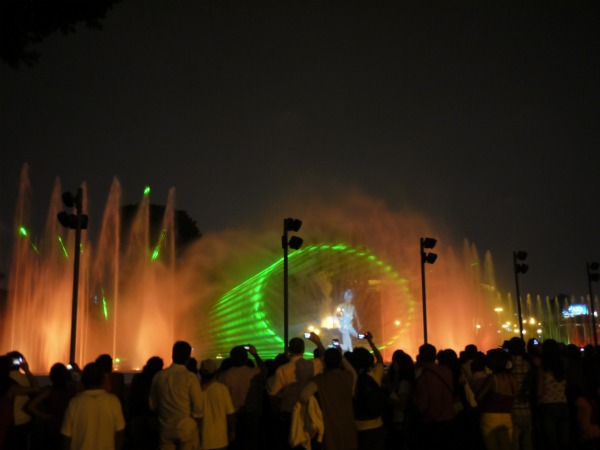

The next day, we finally took to the road. We only had to drive about 45 minutes south to get to our first destination, Punta Hermosa. There are so many quality surf breaks within 200 km south of Lima! We stayed outside of Bravo Surf Camp, owned by a laid-back guy named Abraham Bravo, and surfed the breaks called Senoritas, Caballeros and La Isla while we were there.

Peruvian pro surfer Sofia Mulanovich has a home at Punta Hermosa, and apparently La Isla is one of her favorite surf breaks in the world.
We were on a leisurely daily driving schedule to meet a friend further south in Chile. Ivan grew up in the Chilean beach town of La Serena but now lives in New York, and he’s one of our surfing friends from Rockaway. We had 18 days to make it from Lima down to La Serena, a journey of 3000 kms (1800 miles). We had mapped out a route that allowed us to stop and surf along the way, driving no more than 300 kms per day. La Berenjenita, our kombi, likes to take it slow.
We spent two days in Punta Hermosa, and then headed a little further south to Puerto Viejo. Puerto Viejo is just a bay with a long row of simple beachfront restaurants serving local food.

We ate at one of the restaurants, and they allowed us to park and camp under their awning for a couple of days. The restaurants have primitive showers and bathrooms that you can pay to use. The wave was waist to chest high when we stopped there, but it’s an incredibly long and fun left point break. There were tons of dolphins swimming around both days that we surfed.
Our next stop was Cerro Azul, a bigger beach resort with another long left point break.
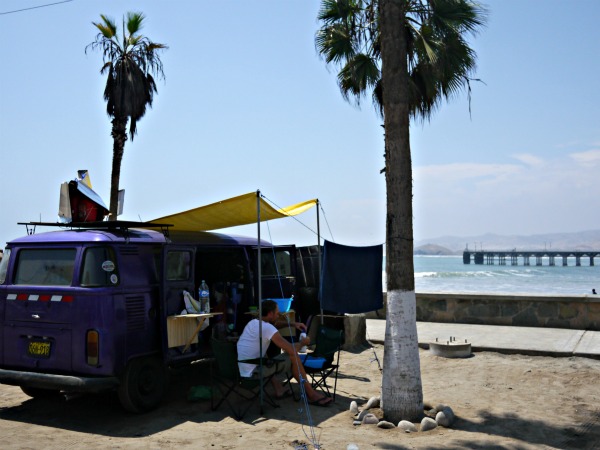
We camped in a parking lot in front of the beach and stayed there for three days. A nice swell came in while we were there. It’s a slower wave, with a lot of room for turns.
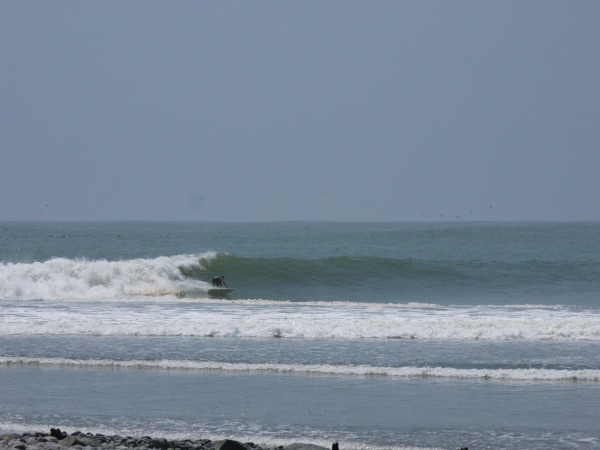
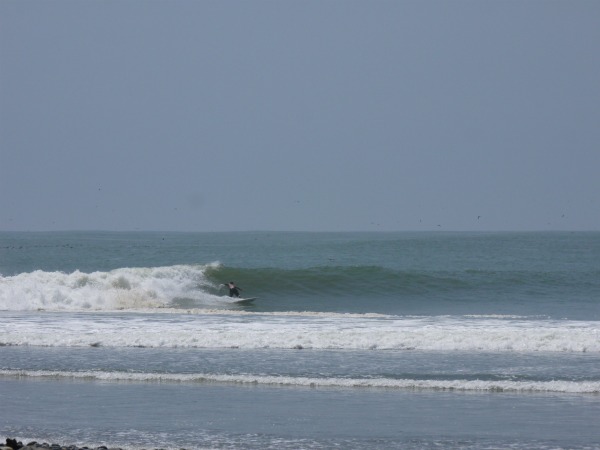
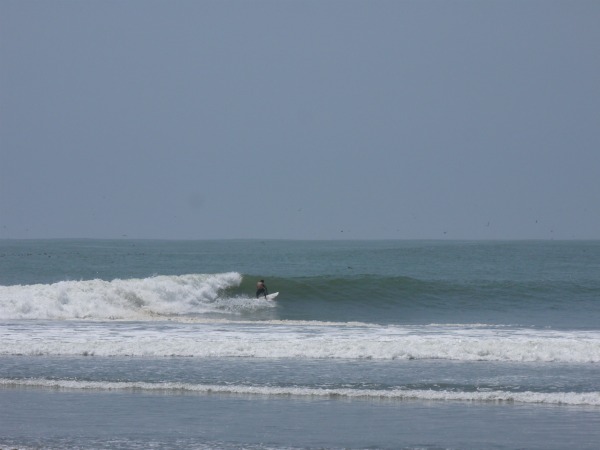


Going south of Cerro Azul, we stopped in a few places that didn’t have waves. We spent one night in Nazca, a city off the coast, in order to take a look at the Nazca lines: giant, ancient, mysterious geoglyphs that were drawn on the ground by the Incans, in an area of plains. The different shapes such as a lizard, a frog and a hand are only distinguishable when seen from above.

What was the purpose of these huge drawings that the Incans meant to be seen from on high?
A pretty stop on the coast, but without surfable waves, was a hotel called Puerto Inka, a few kilometers outside of a town called Chala, that had spaces to camp in front of their private bay.

The waves were big shorebreak closeouts, so we hiked over to the ancient ruins that were on the hill above the hotel and checked out the place where the Incans used to dry fish before sending a runner to deliver it to the rulers in Cuzco. That’s a run of 450 miles!
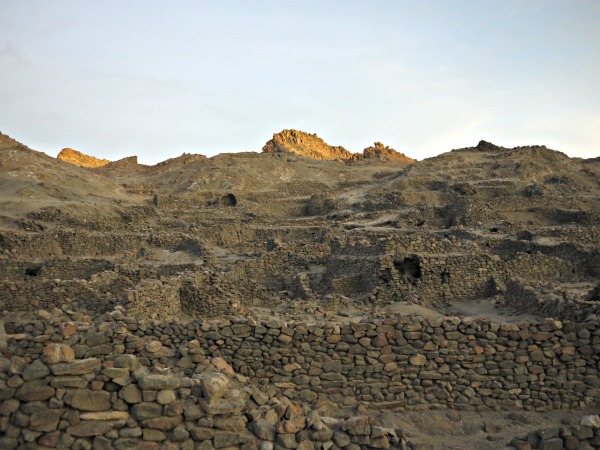
Ruins at Puerto Inka
Driving through southern Peru along the coast reveals mile after mile of desolate desert. Some stretches of coast look a little like Big Sur, in California, but with much less plants and wildlife.
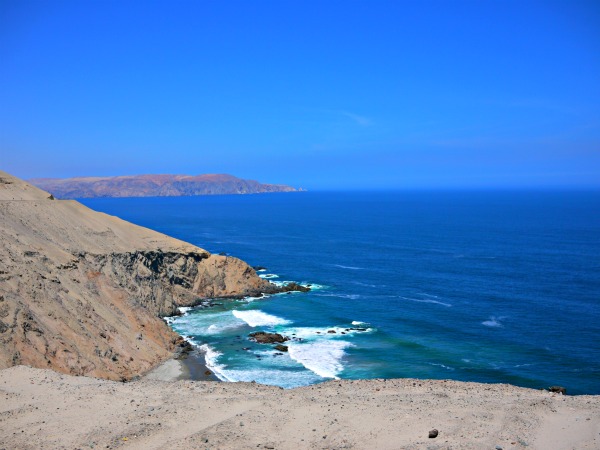

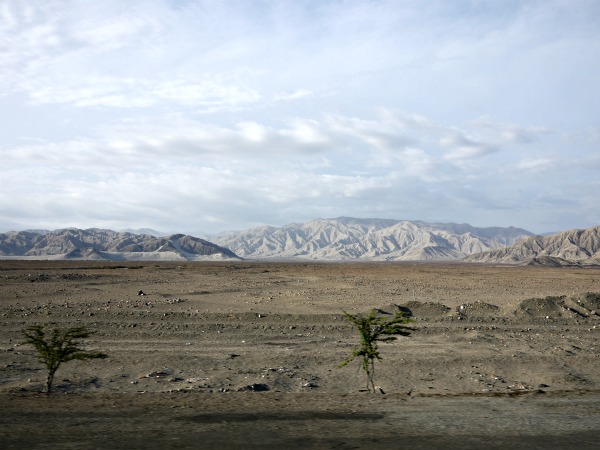

The roads are curvy and steep at times, often with no guard rails to provide any semblance of protection from plummeting down the steep cliff sides. Luckily, Michael is an excellent defensive driver, and La Berenjenita can’t go above 80 km per hour.
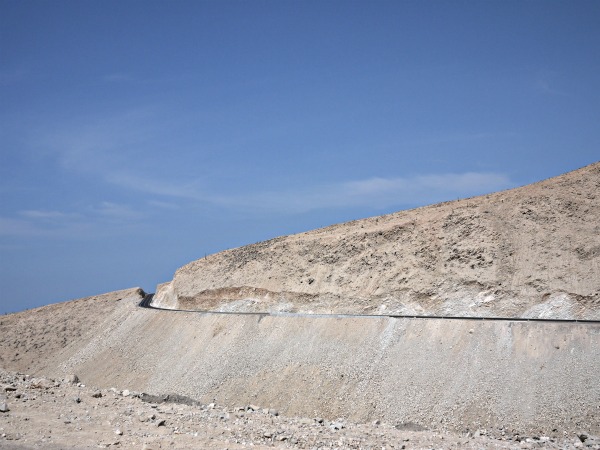
Getting across the border between Chile and Peru was easy. We saw two roadrunners while our car was being X-rayed for contraband goods.

I suggested that Michael chase one in order to see how fast they could run, but the border guard waiting with us commented that the area is full of live land mines from conflicts between Peru and Chile in the 80’s and 90’s, so we only got to see the birds in their stationary form.
Our first stop in Chile was camping on the beach at Playa Las Machas, a beachbreak in Arica that can sometimes get surfable but seems to be most popular with boogie boarders because the rides were short.
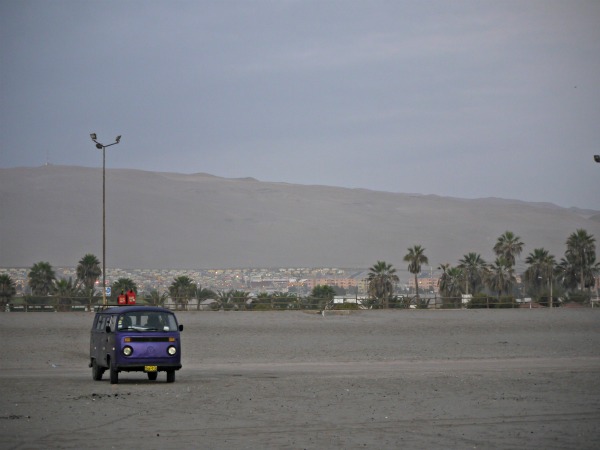
While we surfed there one morning, a pod of dolphins swam within five feet of us and jumped playfully through the backs of the waves right in front of us! It was the closest I’ve ever been to dolphins in the wild, and such a wondrous sight to see them so clearly having fun.
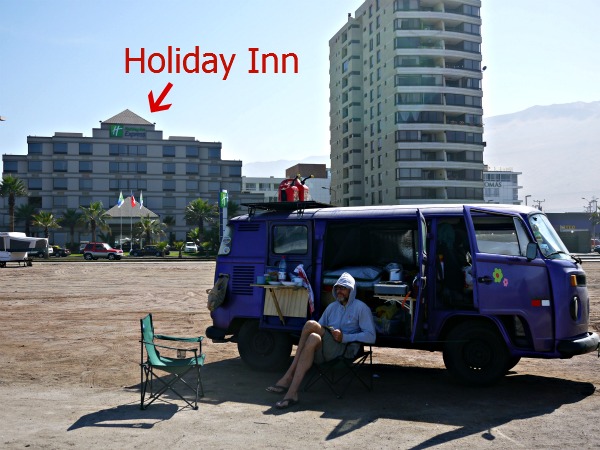
Our next stop was Iquique, another Chilean surf town. We camped out on the beach right across from a Holiday Inn. It was funny to think that we were getting a better beachfront spot with great views for so much less than we would have paid at the hotel.

The next evening, the view was even better: we pulled off the highway at a rocky, isolated oceanfront spot and had a delicious glass of Chilean wine in front of a gorgeous sunset.
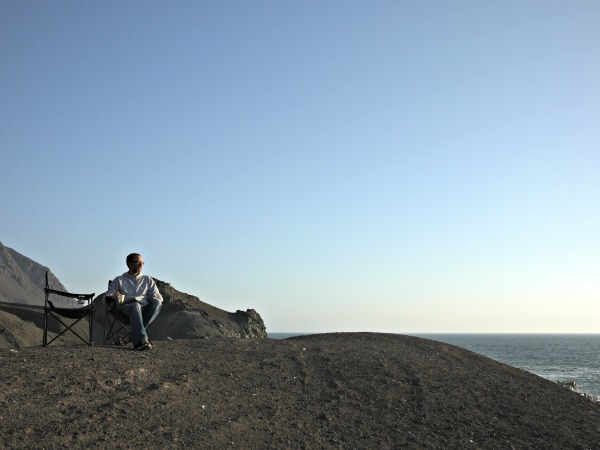
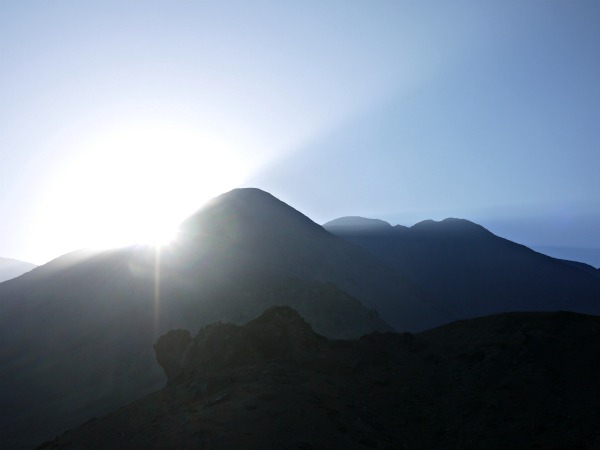
Sunrise over the best boondocking site we've camped at so far
A rocky outcropping 100 meters in front of us held a colony of elephant seals, pelicans, cormorants, and upon closer inspection, Humboldt penguins! Those kinds of wild camping spots are priceles, and there are so many of them along the coast.

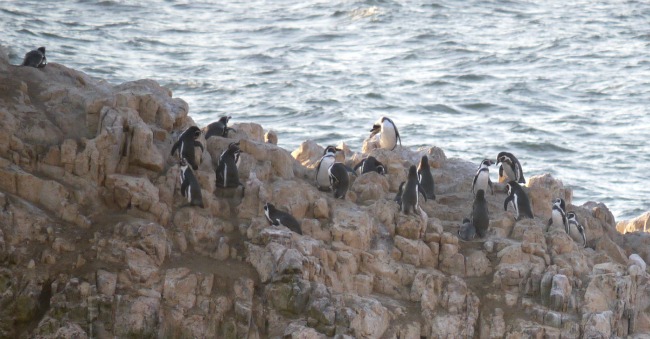
We lost our rusted-out muffler somewhere along the way after the penguin spot while we were driving, so we stopped in the next big city, Antofagasta, to see if we could have it replaced. We were returning to our car right after lunch, about to ask around for a muffler shop, when a VW enthusiast came up to us and asked us about our kombi. He turned out to be the owner of a Beetle and a member of the Antofagasta Volkswagen fan club, and he gave us directions to a cheap shop that was able to weld up a new muffler and attach it to the kombi within a couple of hours. We couldn’t believe our luck! There’s something about old Volkswagens that makes their owners part of a cult.
We camped at Parque Nacional Pan de Azucar next, at a beachfront campground. We took a 1-hour hike the next morning to spot guanacos, which are wild llamas, and got lucky with a small herd sighting.
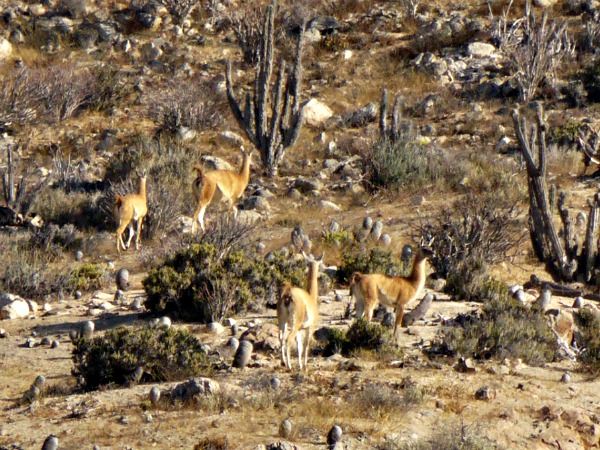
When we finally made it to La Serena, we hooked up with our friend Ivan and his girlfriend Kat, and surfed one of his home breaks, Punta Teatino, several days in a row. We met some of his family and friends, and they fed us two of the best meals we’ve eaten on this entire trip so far. Ivan’s friend Felipe prepared a true Chilean parillada for us on his barbecue: a slew of amazingly tasty grilled meat and sausage. The next day, we went over to Ivan’s aunt’s house where she served us a sumptuous three-course meal of avocado-and-shrimp salad, baked conger eel with a fresh tomato salsa, and poached papayas in syrup with whipped cream and ice cream. We were living like kings!
We drove from La Serena further south with Ivan and Kat, to surf Punta de Lobos. It’s located in a small town called Pichilemu, full of pine trees and fog, and it feels much like Oregon or Northern California.


It’s autumn down here right now, so the weather is getting cold. We have to wear 4/3 wetsuits with boots in the water, and sometimes a hood, if it’s windy and cloudy. The waves are pretty epic.


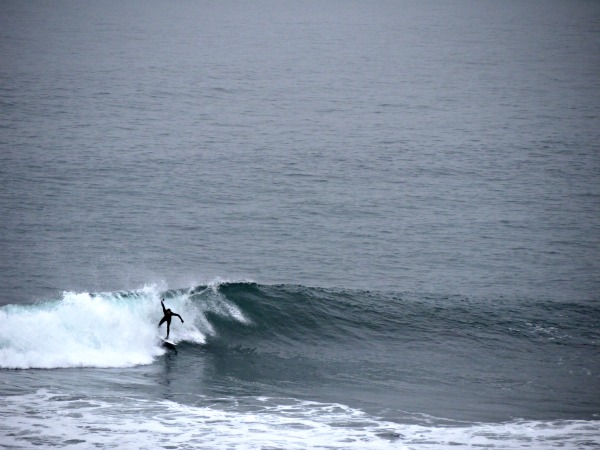

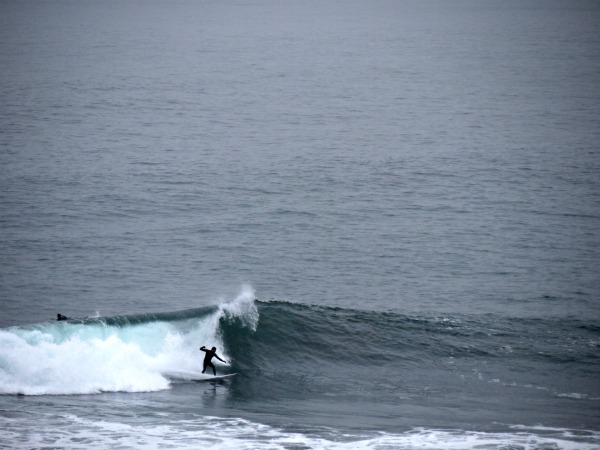


The question here isn’t whether there will be waves today; it’s whether the waves will be too big for mere mortals to surf. There were a couple of days when the waves were 15 to 20 feet, and we watched the trials for the Punta de Lobos Invitational big wave contest.

We’ve been on the road for one month now and love it. We’ve paid to camp only a handful of times, mostly just parking for free beachfront in the middle of nowhere or on the outskirts of town. We cook most of our meals on our small gas 2-burner stove, and spend our time surfing, watching the waves from our camping chairs, chatting with people we meet, looking around the small towns, reading and knitting. I got some yarn and needles back in Quito and knitted us both a couple of hats, which are totally necessary at night here. I also knitted a fat scarf out of some nice Chiloe Peninsula wool that’s sold quite cheaply in the shops in Pichilemu.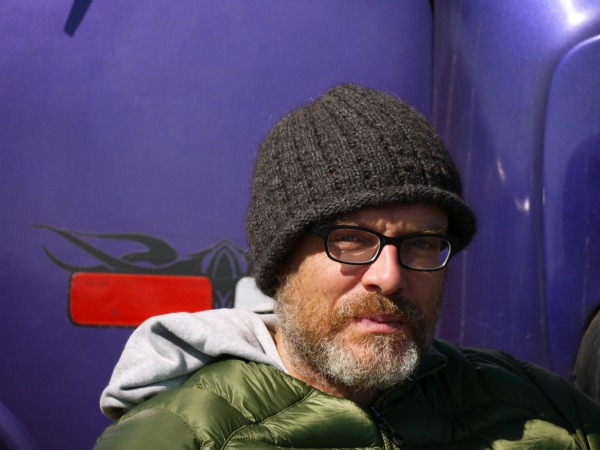

Often, at night in bed, we’ll watch a movie or an episode of a TV show that we’ve picked up for the equivalent of $1 at bootleg DVD shops in Peru. Our latest obsession is HBO’s Game of Thrones – we just finished watching the first season and can’t wait to find out what will happen this coming second season.
We’ve heard of some good surf breaks further south of here, and will leave Pichilemu in the next week to check them out: Constitucion, Curanipe, Tregualemu, Pullay, Buchupureo. The weather will be getting colder the further south we go and the longer we stay down here. Getting into and out of our cold, wet wetsuits takes a little courage, but the waves are always worth it. And when we bed down at night under our warm feather comforter in the cozy little Eggplant, we sleep so well.
It’s a girl!
We are now the proud owners of a purple 1996 Brazilian-made Volkswagen Transporter 2 that we’ve named La Berenjenita, meaning “little eggplant” (her previous name was Doña Volks).

The vehicle transfer at the notary took a total of 30 minutes and was very quick and painless. However, figuring out what we needed to do in order to buy a car took a little legwork.
It’s not difficult to buy a car as a foreigner, but there isn’t much detailed information out there about how to do it. Basically, we just had to get a stamp in our passport from the immigration office, DIGEMIN, that gives us permission to sign contracts as tourists here in Peru. In my next post, I’ll go through the basic process of buying a car in Lima as a tourist.
We still have yet to drive the car outside of Lima, but driving in Lima is hairy enough. No one stops at street intersections if there are no traffic lights. It’s basically a constant game of chicken, where you just have to start inching forward and force the others at the inersection allow you to keep going.
Even before we actually got our van, we met some cool overlanders who were staying at our hostel, Hitchhikers Backpackers, which is the only hostel in Miraflores that has secure, gated parking for cars. All the folks travelling overland that we’ve met have been on the road for a long time; many of them for several years. Hearing their stories of adventure, the unbelievable places they’ve been, their lifestyles, and how they got here has been so incredibly inspiring. It’s honestly like having a whole new world of possibilities open up in front of your eyes.
One of the interesting things about taking this kind of extended trip is that you meet so many other travellers who are taking a year or more off to travel. Back at home, in the time leading up to this journey, the idea can seem so crazy and at times difficult and downright impossible. But once you’re on the road, you meet so many others doing the same thing and having arrived there by so many different methods, that you realize anything really is possible. Below are some stories to inspire and amaze you.

Above, from left to right are Dirk and Maria of 2 Nomads, Luis and Lacey of Lost World Expedition, us, Alice and doggie Kaos, Martin (his partner Martina took the picture) of Amerika En Kombi, and Alice’s partner Flo, and their visiting friend.
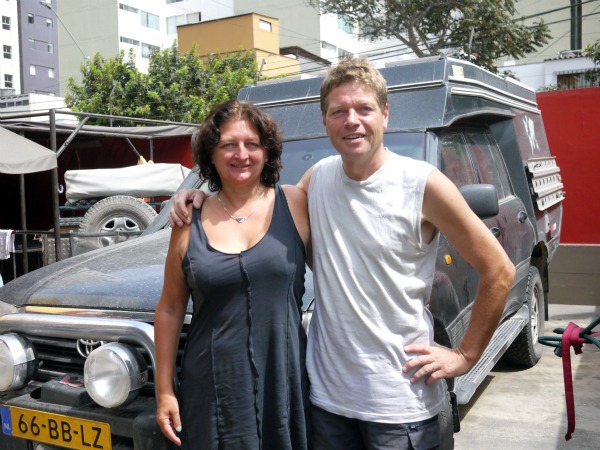
Dirk and Maria have been travelling in their Toyota Landcruiser with trailer and solar panels, for 7 years. They plan to keep travelling forever. The list of places through which they’ve driven is impressive, to say the least, and includes a recreational drive of the original Paris-Dakar Rally route.

Luis and Lacey started travelling 2 years and 9 months ago, in their Toyota Landcruiser with roof tent. They originally set out for one year on the road, but found that they enjoyed travelling more slowly than they expected. They’ve driven from northern California through Mexico and Central America, shipped their car from Panama to Colombia, and are making their way down to Ushuaia, Argentina.

Alice and Flo, and their dog Kaos, have been driving for 2 years in their RV that they bought in California for a song. The RV is old, though, and requires a lot of upkeep. When we met them, they had to crawl under the RV and fiddle with the starter motor every time they wanted to start it up. How did they ever figure out by themselves which doodad to fiddle with to get it to start? This baffled me. They both make a mean Pisco Sour.
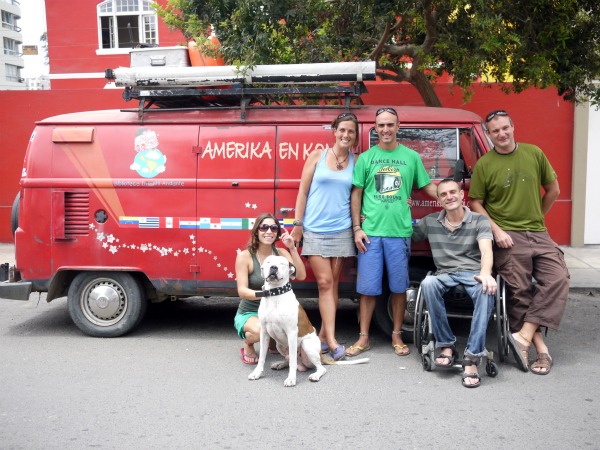
Martin (bright green t-shirt) and Martina (light blue tank top) have been travelling Central and South America for 3 years in their little red kombi, on a route from Argentina to Mexico and back. They are two schoolteachers who left home with $600, and have been making beautiful jewellery, cool t-shirts and tank tops, and postcards that they sell along the way to fund their travels. They are the ultimate personification of “if there’s a will, there’s a way”. Not only are Martin and Martina wonderfully open, friendly and creative, but they’re generous with their time, too: they’ve been stopping at schools in small towns along the way with their van full of children’s books, and organizing activities in classrooms to get kids interested in reading. They’re a few months away from reaching home again, and are already contemplating where to go next — Africa maybe?
We’ve also been inaugurated into the community of Volkswagen kombi and Westfalia fans. The week before we purchased La Berenjenita, we were walking around Miraflores and spotted a guy inside his Westfalia camper van. We walked over to talk to him, and ended up making a great new friend. Miguel is part of the Lima Westfalia and Kombi Club, and he introduced us to one of his friends and fellow club members who is a mechanic and knows kombis well. His friend checked La Berenjenita out for us before we bought her. Miguel has been instrumental in helping us locate all the little stores and workshops here in Lima with things we’ve needed to get our van ready for the long drive ahead.

Of course, one of the most important things was a bed long enough for Michael’s legs. We designed and built a storage box to place under our custom-ordered foam mattress, with a door that props up to serve as an extension for the bed.


Two nights ago, we had the honor of attending a meeting of the Westfalia and Kombi Club with Miguel. It was our first time at a car club meetup. We drove La Berenjenita over to the parking lot that serves as the clubhouse, and were delighted to find not only beautiful, mint-condition, fully restored Westfalias, but also other VW clubs having their meetups, with gorgeous antique and souped-up Volkswagens. It was a super fun night.
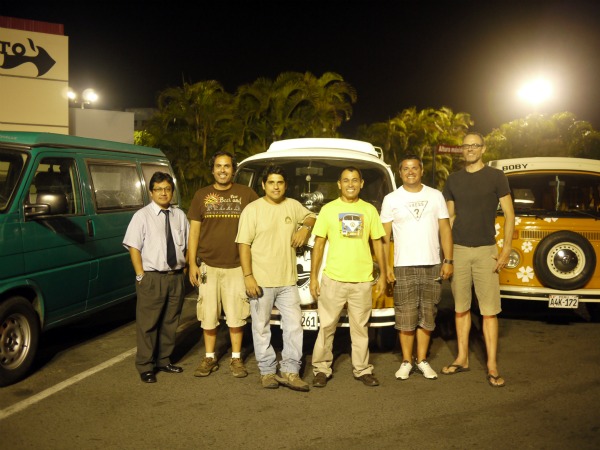

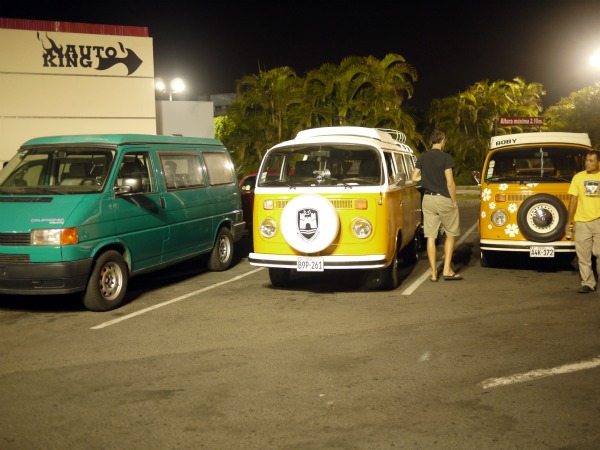

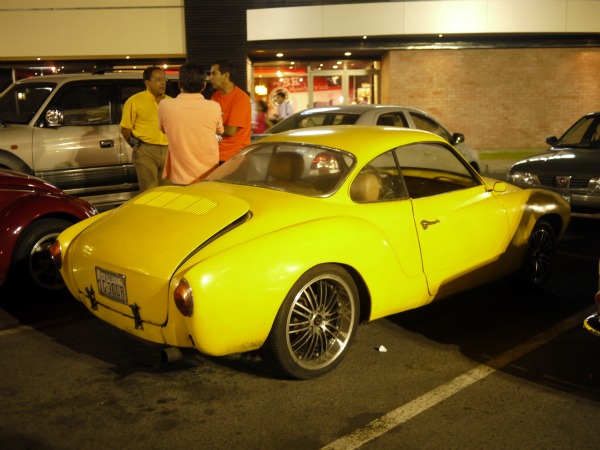

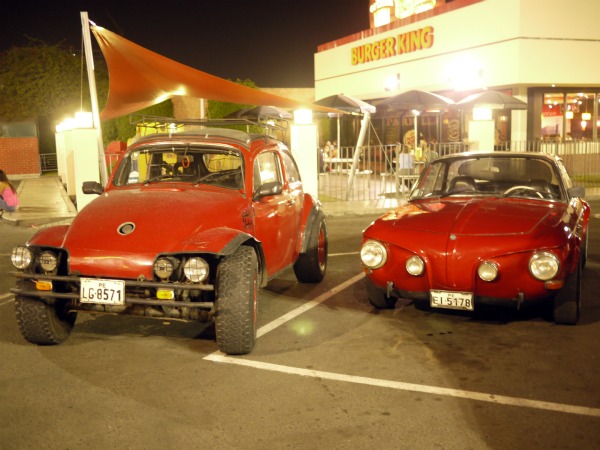
We didn’t start this trip with any notion of buying a car, but somehow La Berenjenita worked her way into our life, and we’re happy and excited to start this new chapter of surf travel. We’ve been surfing every morning, and then we get down to kitting out the van every afternoon. As soon as we finish building it out and we get our tarjeta de propriedad, we’ll be heading south to surf the coast all the way down to middle Chile, and then hopefully meeting up with some friends to surf in Pichilemu.
Through The Looking Glass
Lima is a like a mirror image of San Francisco, a southern hemisphere version minus the hills: the waves, the water temperature, the joggers, the climate, the fog, the tendency towards earthquakes. We really like it here so far. It’s large (population: 9 million), cosmopolitan and the people are very relaxed, although their driving isn’t. Pedestrians definitely don’t get the right of way in this city.
We’re staying in the Miraflores neighborhood, which is a pretty tony place. The houses are spacious and attractive, and there are many modern glass-and-steel luxury apartment buildings interspersed between beautiful old homes like these:


Miraflores has a lot of great vegetarian restaurants as well, which we’ve been appreciating after an assault of carnivorous dishes in Quito. We found a cute little organic farmers’ market that operates on Saturdays, selling all kinds of things from wooden handmade toys to produce to dried herbs and teas:

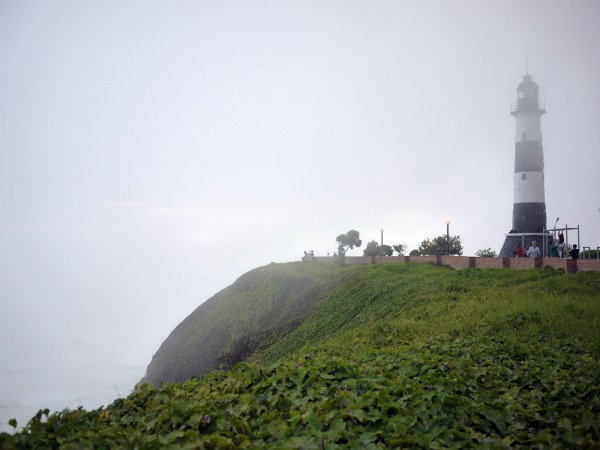
Miraflores is set on cliffs above the ocean, and the clifftops above the ocean have parks built all along them, perfect for a sunset stroll. The fog rolls in around 4 pm every day and cools things down. It’s summertime here, but it never gets too hot.
The waves have been pumping, although the ones at the breaks closest to us don’t have a great shape — they’re pretty crumbly and slow, which is probably why two of the breaks are named Waikiki and Makaha. We’re happy to get in the water, but are really looking forward to seeing better spots we’ve heard about, like Lobitos, Chicama, Huanchaco and Pacasmayo.

As we mentioned previously, our mission in Lima was to find a van to tool around Peru, Ecuador and Chile…and we’ve found one!!! We are about to close on a purple ’96 Volkswagen Transporter 2 on Monday, so we will post pics soon. The contract signing takes about 30 minutes, but then we’ll have to wait up to 10 days to get the registration changed into our name, so we’ll be sticking around Lima for that long. We’ll be using the time to set the van up with a bed, a 2-burner stove, and some kind of storage system for our clothes and boards. We’ve been feeling like this is the beginning of a whole new voyage, a trip-within-a-trip!
It’s taken much research to figure out how to go about buying a VW van in Peru, although the process itself seems pretty easy. We’ve been getting a lot of email help from the guy behind the blog Kombi And Me, which we found by googling. Thanks, Will! If you’re interested in finding out how to buy a vehicle in Peru as a tourist, check back soon, as we will have a detailed post on it in the next week or so.
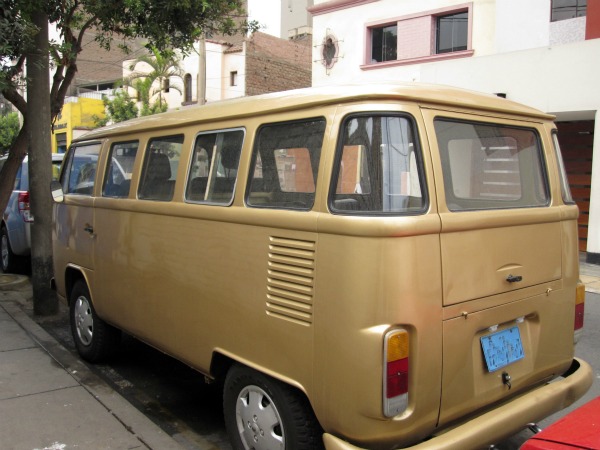
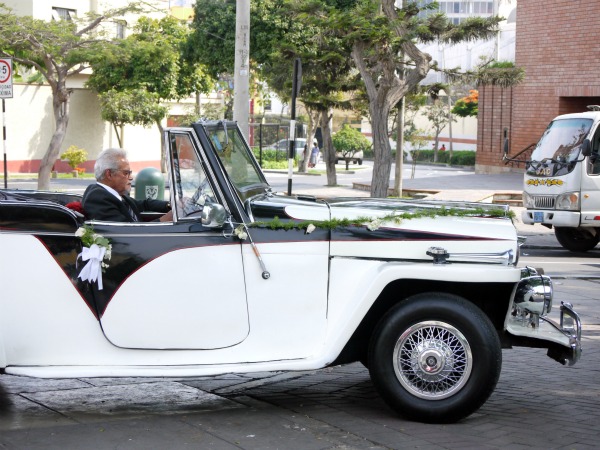
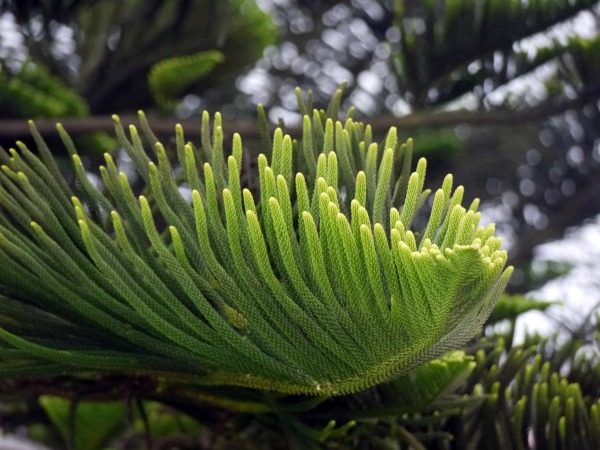
In the meantime, we’ve been taking photos of other VW vans we see around the city. Once you start looking, they seem to be everywhere. Here’s one to tide you over until we get ours on Monday, along with a few other random Lima pics.


 Surfing Round The World