Nicaragua: Managua and Popoyo
After Barra De La Cruz, we travelled through southern Mexico, Guatemala, El Salvador, and Honduras over three days by bus. The buses, run by Ticabus, were clean and comfortable, with A/C and a toilet. The toilet was not as horrendous as we’d been warned; you just need your own toilet paper and hand sanitizer. There were even movies played during the ride; some were English with Spanish subtitles, and some were dubbed in Spanish. They were great for practising our Spanish comprehension.
Managua was a little jarring after being in the tiny, laid back town of Barra. The bus station is in the middle of a bad neighborhood with many reported muggings, where you need to take a taxi at night and it’s even sketchy to walk during the day. Strangely, many budget hostels are located in the area, and we were only staying two nights, so we chose a hostel 2 blocks from the bus station. As soon as you get off the bus, aggressive touts who are paid a commission by the hostels start harassing you and trying to convince you to go to one of their hostels. They’ll tell you the one you’ve chosen isn’t safe or as nice as the ones that they work with. They grab your bags and try to “help” you. We were happy we knew which hostel we were going to, though it was still hard to get our bearings with those guys on our tail.
We chose a hostel called Los Felipes at $20 US a night with fan and private bathroom. The rooms were not bad, but the grounds are really pretty.

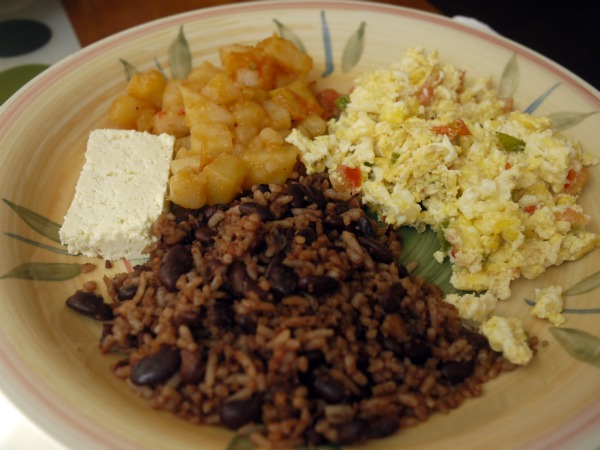
We are addicted to gallo pinto, a side of rice mixed with black beans, that’s ubiquitous in Nicaragua:
We walked up the Loma de Tiscapa, a hilltop lookout over the city. The view was pretty, and there was a small attached exhibition about the history of Augusto Sandino, a revolutionary who fought against government corruption and US control of Nicaragua. Ulysses, a guide who works at the Loma, gave us an informative and interesting rundown of Sandino’s life story.

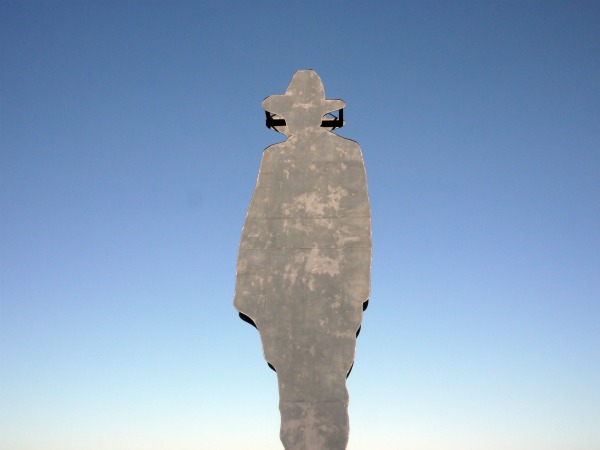
There’s a huge metal silhouette at the top of the hill, which is supposed to be where Sandino was murdered.
One day in Managua was enough for us, so we took the bus and a cab to Popoyo, a small town on the beach about 2 hours south.
We had considered knocking Nicaragua off our travel list because we’re hitting it in the small-wave season, and had heard conflicting information about whether there would be waves at this time of year. We decided to try it since we’d never been here, and WE ARE SO GLAD WE DID!!! Popoyo is beautiful, quiet, deserted beaches, undeveloped, and with very consistent, uncrowded waves. We surf Popoyo, a reef break with rights and lefts, at least once a day, often twice a day. We’ve surfed another wave called Santana a couple of times. It’s a super fun, fast, short, barrelling ride. the waves have been head-high to one or two feet overhead.
In between the two breaks is a giant rock that looks like a battleship, called Magnific Rock:

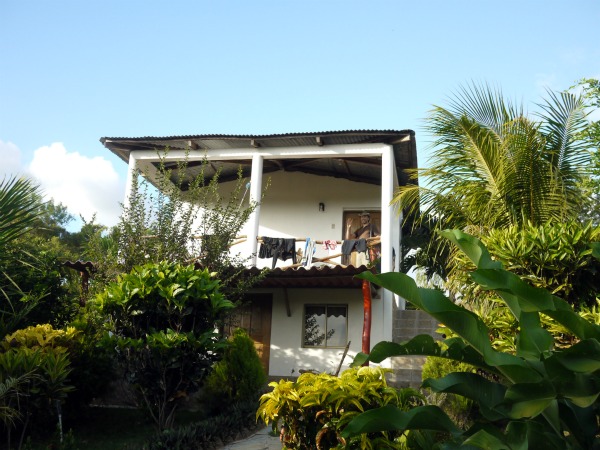
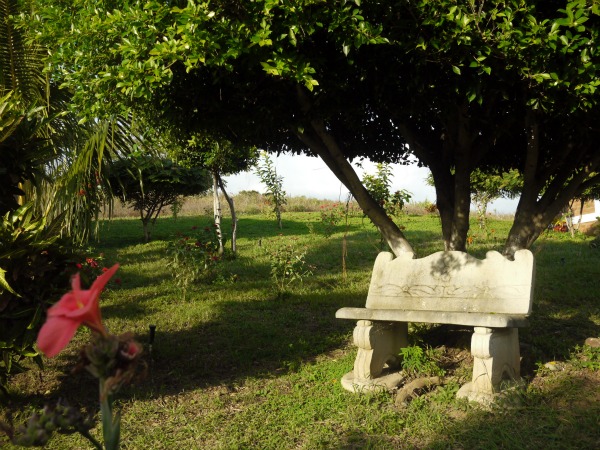
We’re staying in an apartment with private bathroom (no kitchen), on gorgeous grounds, called NicaWaves. The owner, Mike, is incredibly thoughtful and accommodating. There’s an on-site restaurant with an extensive, very reasonably priced menu. It’s a 10-minute walk to Popoyo, and a 30-minute walk to Santana from our apartment.

We’ll be sticking around here in Popoyo until the waves get flat, or a bit closer to Christmas, whichever comes first. Then we’ll be heading to Granada, a colonial city 1 hour north of here, back towards Managua. After a few days of looking around Granada, we’ll be taking the bus to Bastimentos, a quiet island beside Bocas Del Toro, in Panama.
Our Spanish is getting better day by day. We’re trying to learn a few Nica expressions, to impress the locals who work at Nicawaves. We’ll leave you with these so you can learn along with us:
- El que madruga come pechuga, el que tarda come albarda: Equivalent to “the early bird gets the worm”, literally means “He who is early eats chicken breast, he who is late eats the saddle.”
- Barriga llena, corazon contento: Full stomach, happy heart.
In pursuit of more waves: Barra De La Cruz to Popoyo

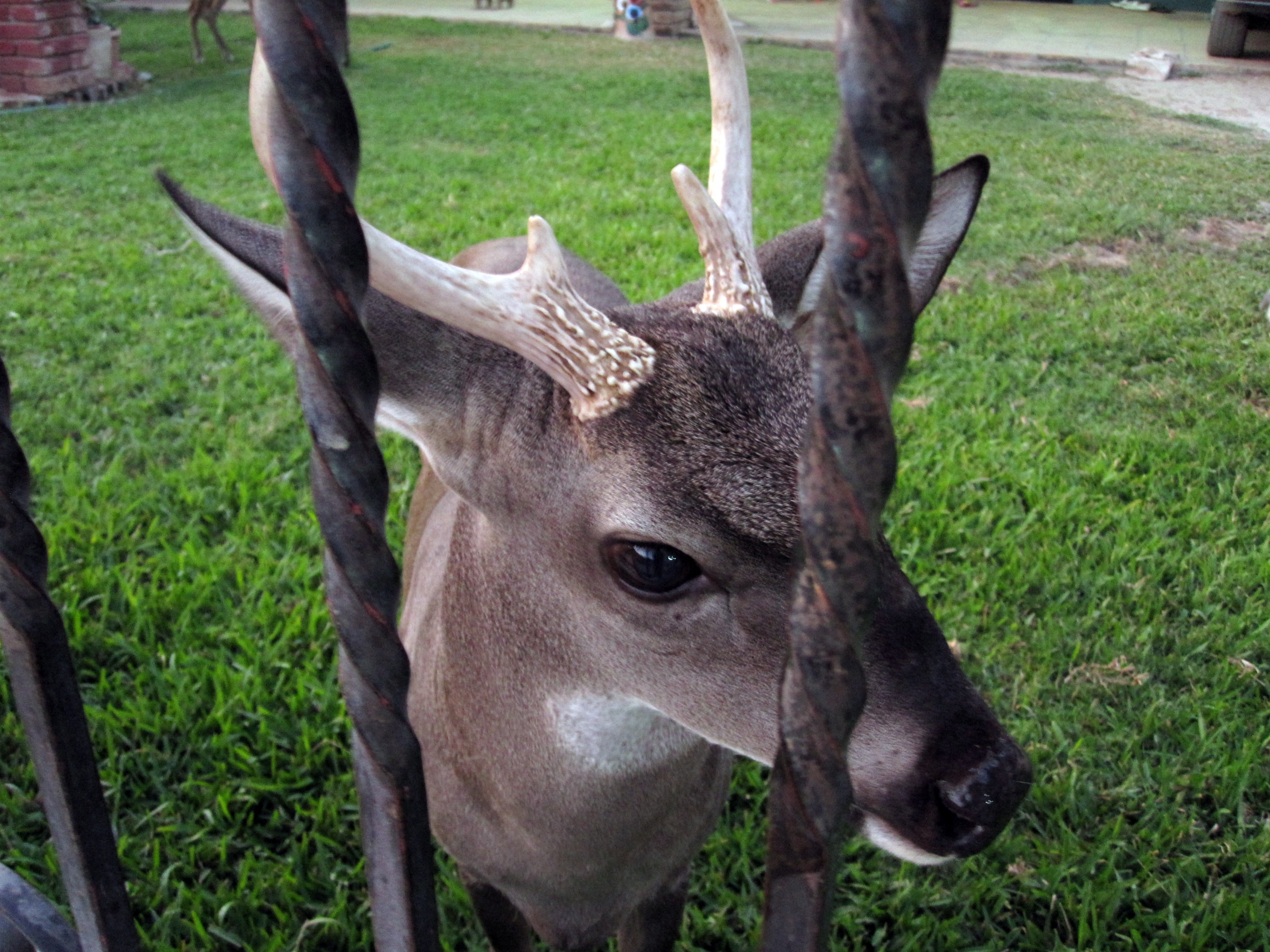
Barra De La Cruz was a wonderful experience. The town is tiny, the locals are fun and friendly, we ate some extremely tasty tacos (the best chicken tacos I think I’ve ever had!) and surfed some of the longest waves of our lives so far. A big part of the charm is that the town is still quite undeveloped. It’s a 2.5 hour bus ride plus 40 minute taxi ride from Puerto Escondido. There’s one internet place in the town, and it’s only open from 6 pm to 9 pm (hence, the lack of posts during our stay there). Weirdly, the house connected to the internet shop had four deer in their front yard. They were friendly, but there was something a little strange about people keeping deer as pets.
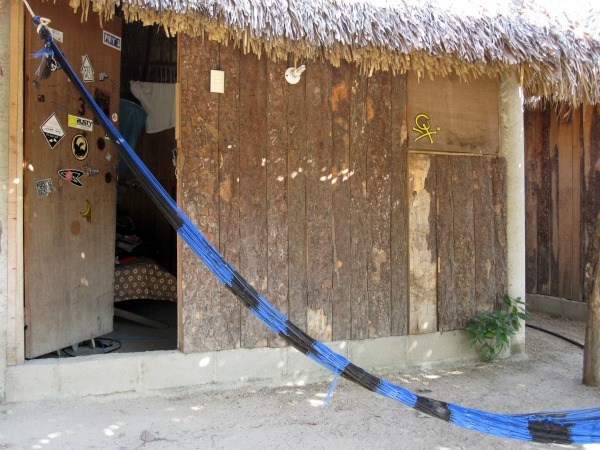
We stayed at Pepe’s Cabanas, one of the more popular spots since it’s listed in Lonely Planet. 150 pesos (about $10.50 US) gets you a cabana for 2 or 3 people, or you can stay in the dorm cabana for 50 pesos per bed. There are shared toilets and showers with cold water (though it’s so hot most of the time, we can’t imagine wanting hot water), and a small restaurant that serves breakfast, lunch and dinner. There are a few other places to eat in town as well, and it’s all very reasonably priced.
The town of Barra is tiny, but the surf spot blew up in 2006 when the WCT held the Rip Curl Search contest there. However, development is still pretty non-existent, I believe mostly due to the community reigning it in and preventing outsiders from moving in and building. There was a rumor that Pepe, the owner of the cabanas where we were staying, was offered a million dollars for his land, but he turned the offer down.
The waves weren’t huge while were there: only about head high on the best sets, but up to 150 yards long! The swell we were hoping for never got as big as predicted, and the swell direction was a little off, so that the wave was quite slow. But with a long, slow wave, you have time to try new moves and get a lot better. We both improved quite a bit just from one week of surfing Barra. We can only imagine what that wave would be like on a good south swell! And we are definitely going to come back more than once in the future, in order to find out…
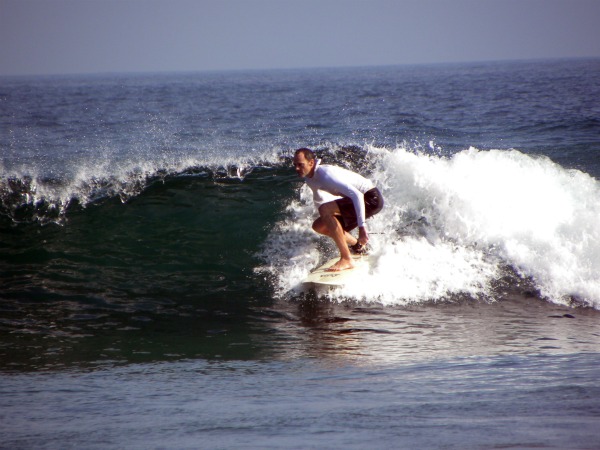
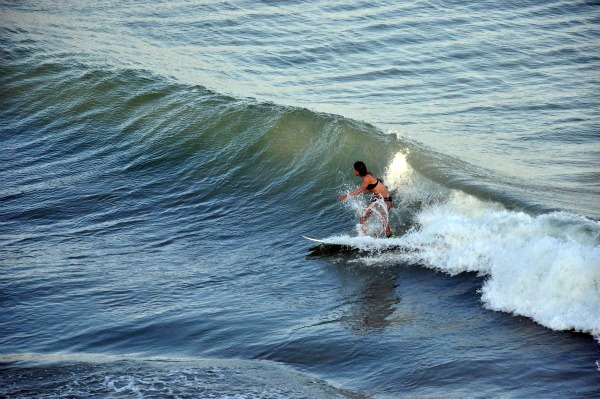
The beach is a 15-minute walk from town, and you have to pay 20 pesos per person to enter every day. We mostly did the walk at the crack of dawn. We were tired, but dawn was only at 6 am. We’re used to getting up at 4:30 am in the summer for Rockaway dawn patrols!
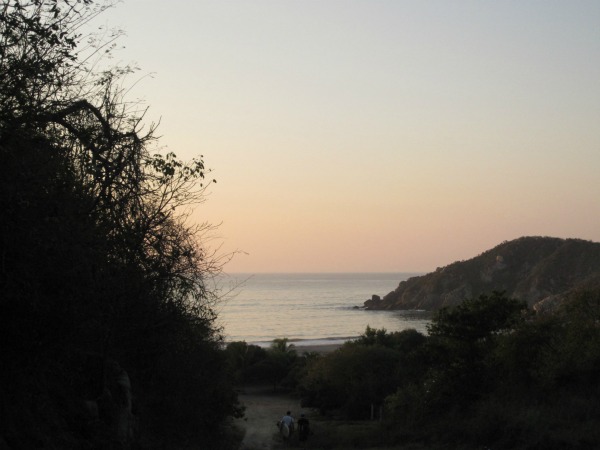
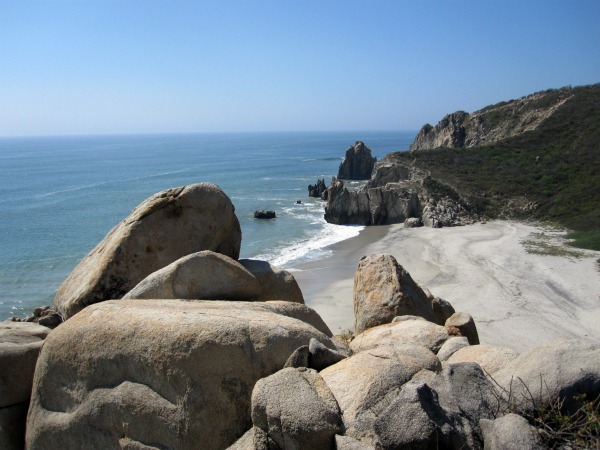
We spent some flat-water time hiking the rocks at the tip of the point break. Here’s the view of the next bay south of the break:
We also visited a waterfall; the one called El Chorro, which is known as the small one, and is a 20-minute car ride away. Apparently, there is another series of four waterfalls that is much larger, but it was a bumpy 90-minute ride. The El Chorro fall leads to a river where you can swim.
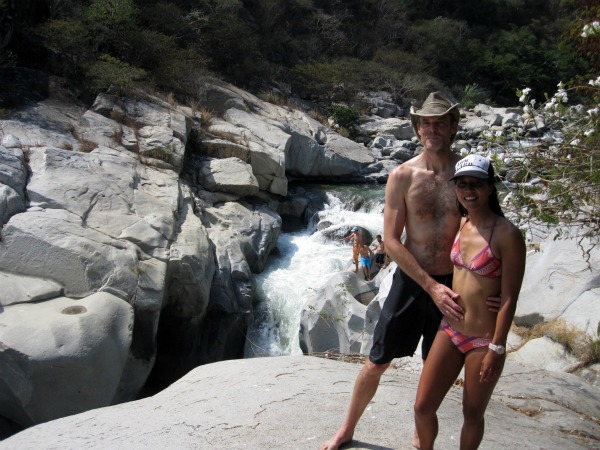
In the background of the above photo are Sammy, a snowboarder and surfer from Switzerland, who’s travelling with his girlfriend Corinne, and… Robert and Matt from Rockaway Taco! We ran into the guys (and girl) from Rockaway Taco — Andrew, Matt, Robert and Sarah, as well as Zach from Rockaway’s AND Coffee — in Barra De La Cruz. Sarah cooked up an amazing vegetarian Mexican-influenced Thanksgiving dinner, to which we wrangled an invitation, and we saw a tarantula during the course of the evening at their lodgings.
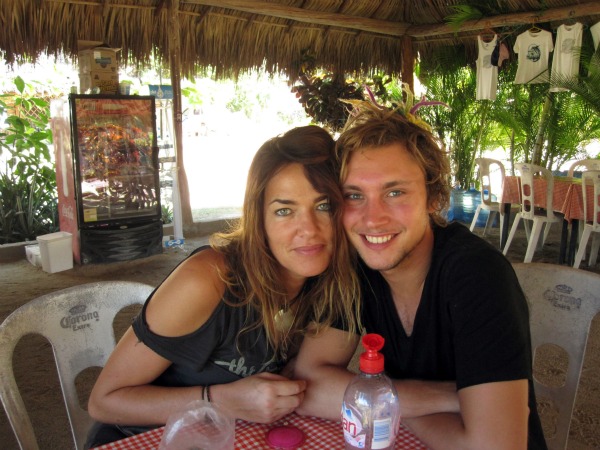
We had such a fun time in Barra, largely due to the great people we met and hung out with. The aforementioned Corinne and Sammy:
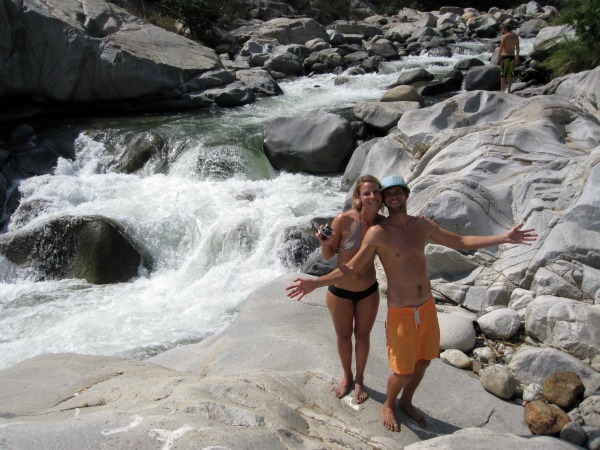
Dany and Edoardo, from Portugal:
The Rockaway Taco crew (just Sarah pictured here, third from the right, with me, Dany and Corinne):
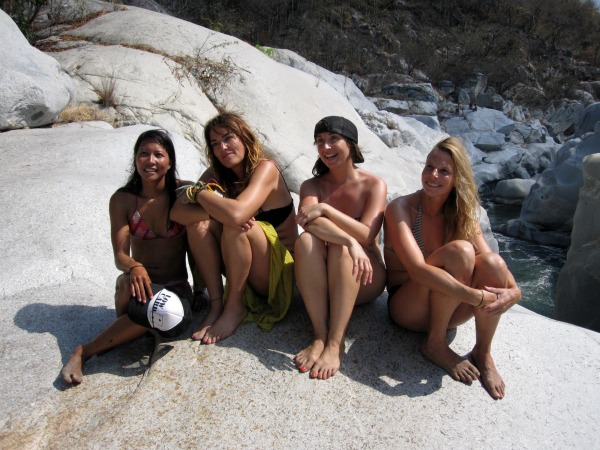
And quite a few other people that we would see in the water, and inevitably run into at one of the three restaurants in town where we would eat each night.
When the waves totally died, we decided to begin the three-day bus ride towards Popoyo, Nicaragua. We arrived here in Managua via four different buses totalling 38 hours on the road. The price difference between the extremely cheap Central American buses and plane tickets is enough to make this journey by land very worthwhile. We stayed in Managua for one full day (two nights) and did some looking around. But I’ll save that for another post…
Our Mexican home cooking
As we mentioned in this post on keeping costs down, we have been cooking at our apartment a fair amount. We head over to the Mercado Benito Juarez, in the center of town, every few days to pick up things like white rice, black beans, tomatoes, avocados, limes, papaya, pineapple, guavas, bananas, onions, eggplant, broccoli, jalapenos… you get the idea.


We then usually stop by at the largest supermarket in town, Super Che, to get things like granola, yogurt, and any specialty items like chips, chocolate, nutella or salami, that we’re craving and just have to eat.
If you get a hankering for some authentic Mexican eats, or if you just miss us and want to pretend we’re sharing a meal, you can try some of these simple things we’ve been preparing:
Tasty Hot Salsa
- 8 to 10 jalapenos, tops removed (but keep the seeds for kick!)
- 3 cloves of garlic, skins removed
- juice of half a lime
Tortilla Soup
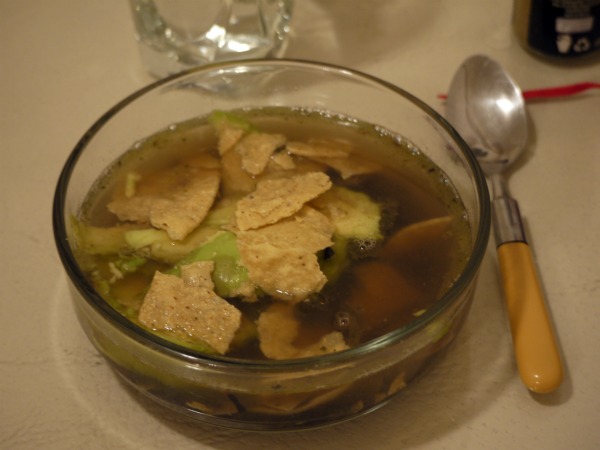
- 2 to 2.5 liters veggie or chicken stock
- 3 cups cooked black beans
- 2 avocados, sliced
- 1/2 a medium-sized onion, diced
- 1 tbspn olive oil
- tortilla chips
- for garnish and seasoning, served on side: cilantro, limes, sour cream and Tasty Hot Salsa (recipe above).
Tacos Con Papas y Frijoles

- 8 small corn tortillas
- 2 medium-sized potatoes, cubed and boiled
- 2 cups cooked black beans
- sour cream
- 2 avocados, sliced
- 1 diced red onion
- cilantro
- Tasty Hot Salsa (see first recipe above)
- queso fresco, crumbled
Guacamole
- 2 ripe avocados
- 1/2 small red onion
- juice of 1 lime
- 1/4 cup cilantro leaves, chopped
- 1 tbspn cumin powder, or better yet, freshly crushed cumin seed if you have it
Banana Pancakes (or, Ubiquitous Backpacker Hostel Breakfast)

Other tasty things that don’t need cooking:
- Papaya with lime squeezed on it
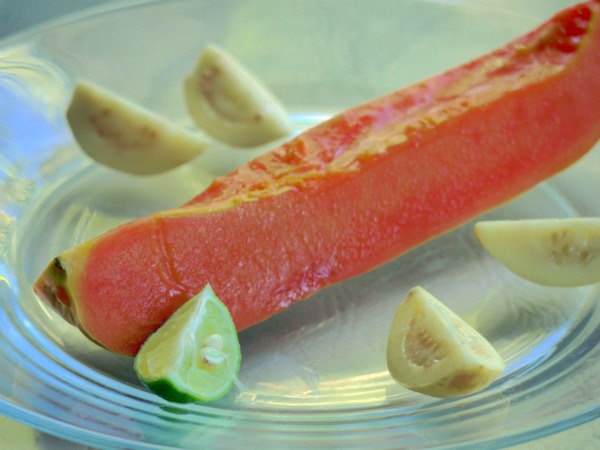
- Guavas, quartered (but we don’t eat the skins). Those are guava quarters in the above papaya photo.
- Tunas rojas — not sure what they’re called in English, but they are red fruits from cactus plants. The green versions (tunas verdes) are not as sweet.

Back in the saddle again
Michael is surfing again!
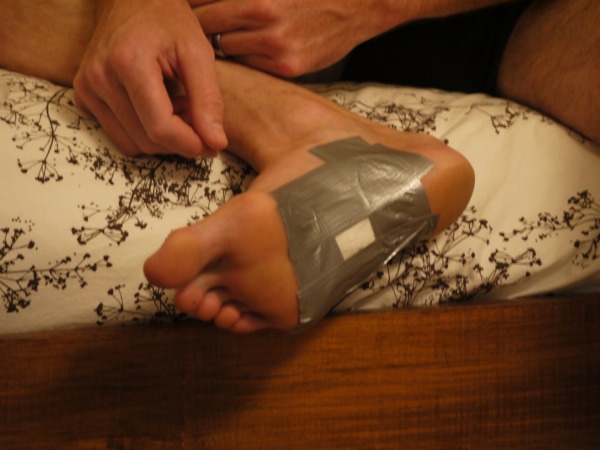
Yesterday was his first day in the water, in preparation for a bigger swell today. He has been duct taping a piece of plastic over his healing cut, and then wearing one boot on that foot, but the tape always comes off in the water.
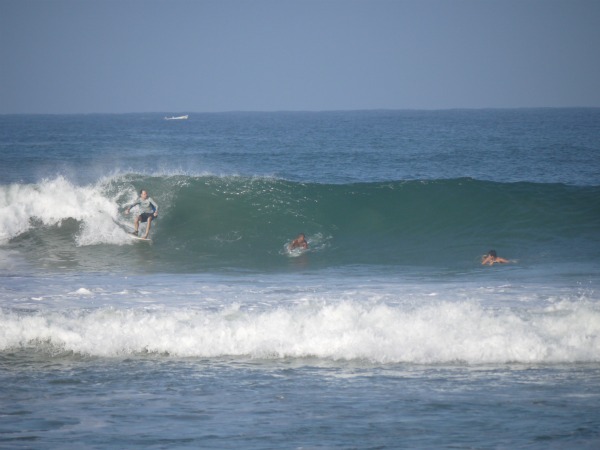
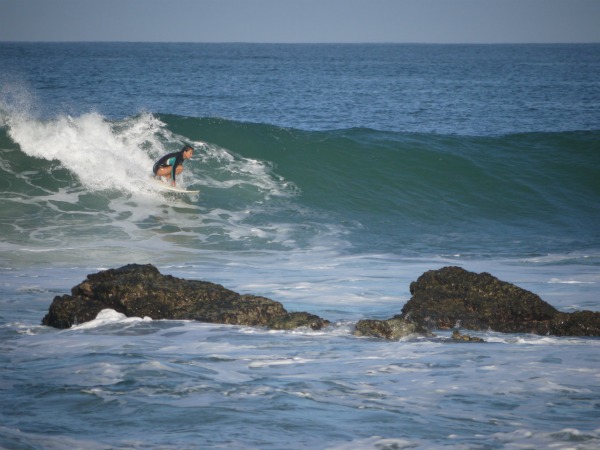
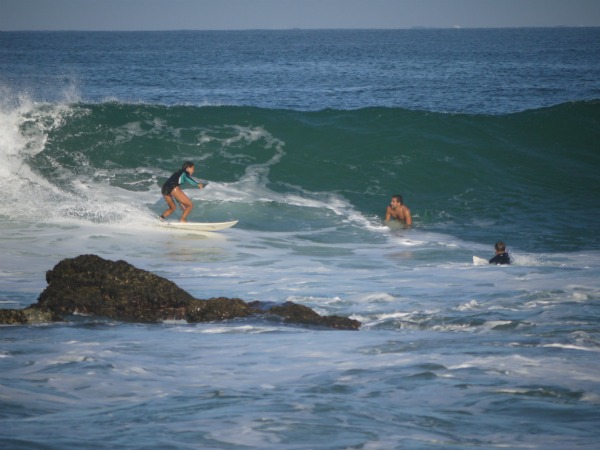
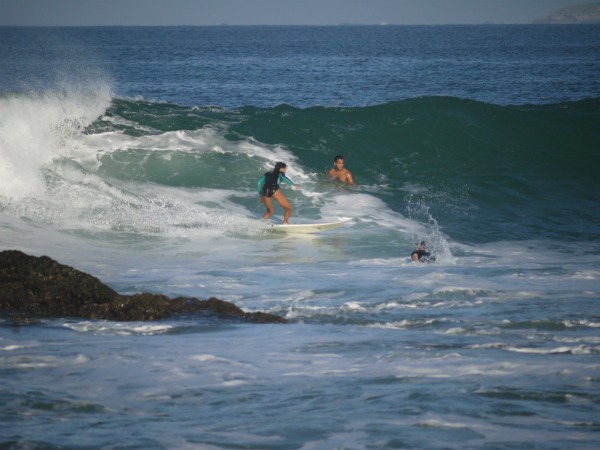
Alan asked for more surfing photos, so here are a couple of full length sequences.
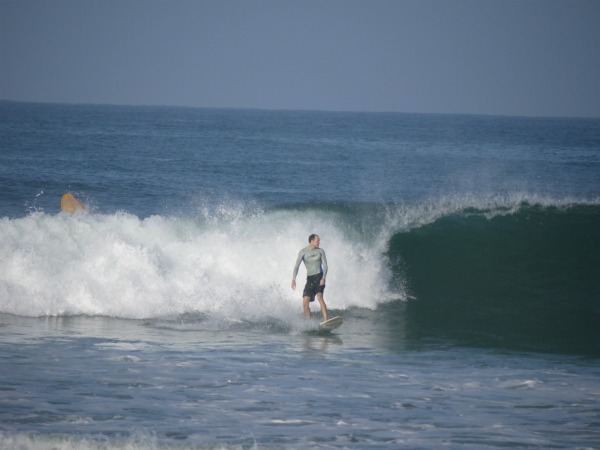
1) They call them “kooks” here, too:
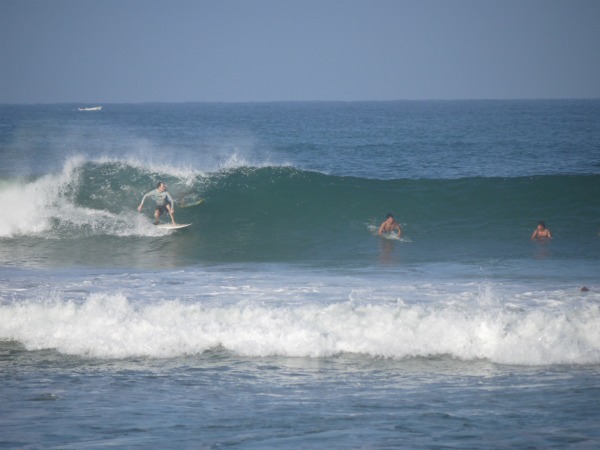
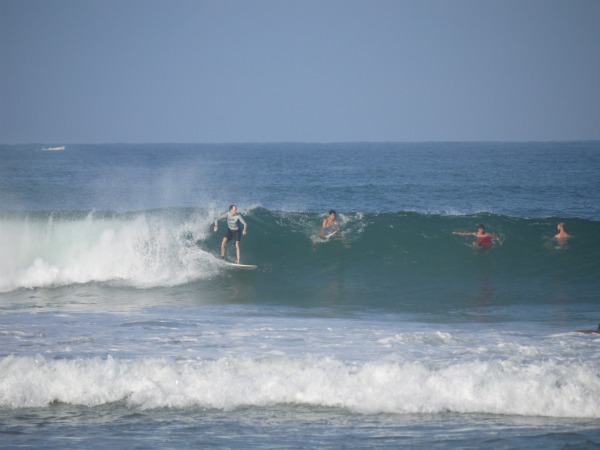
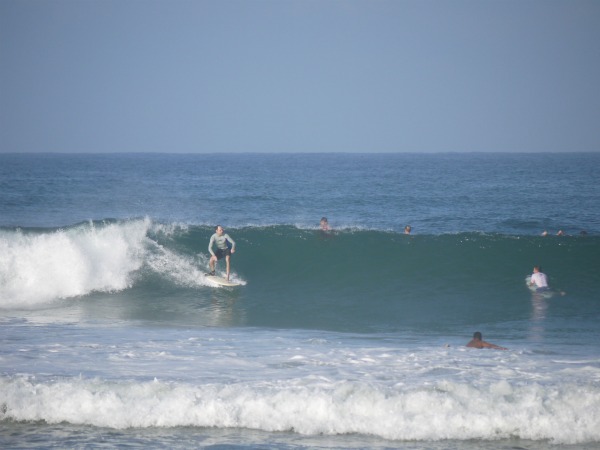
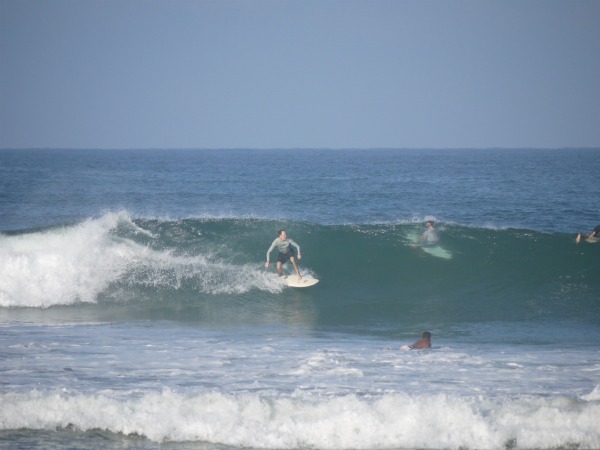
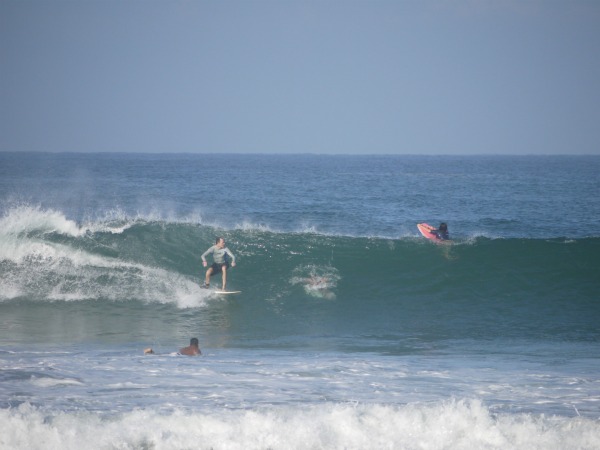
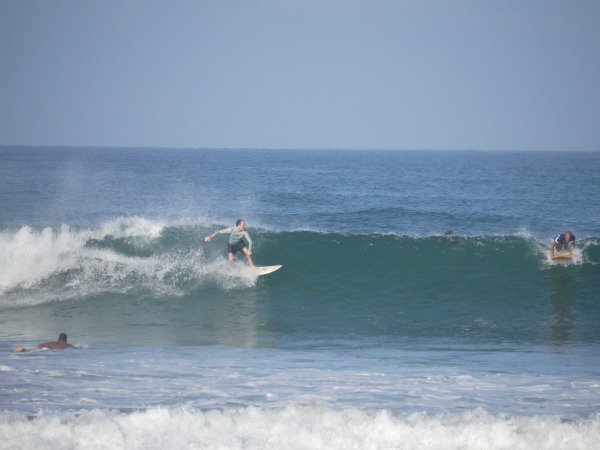
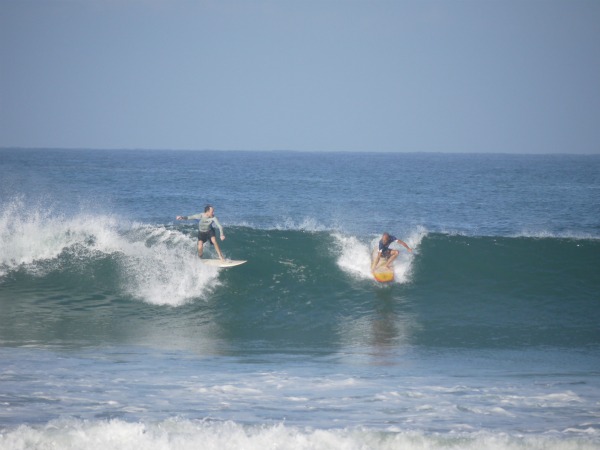
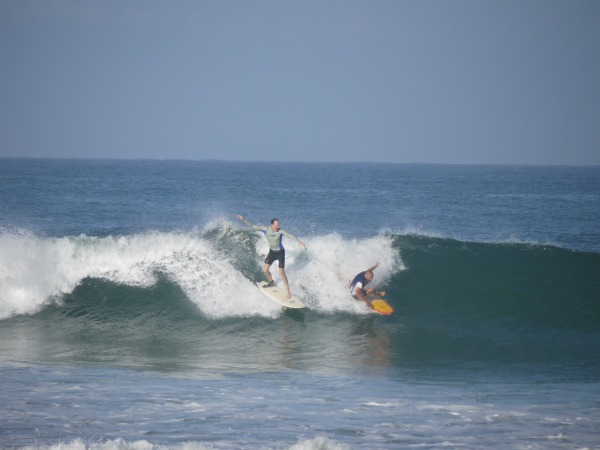
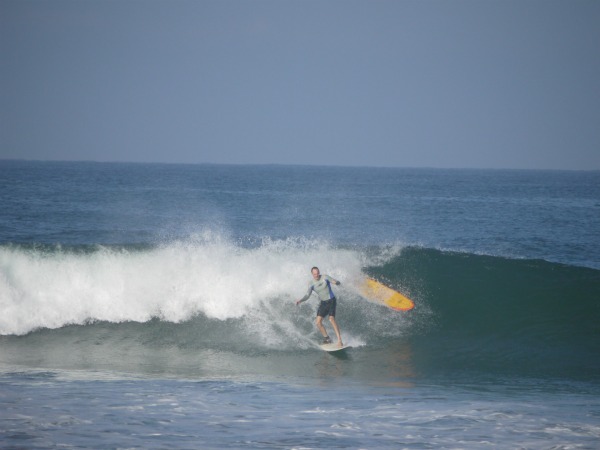
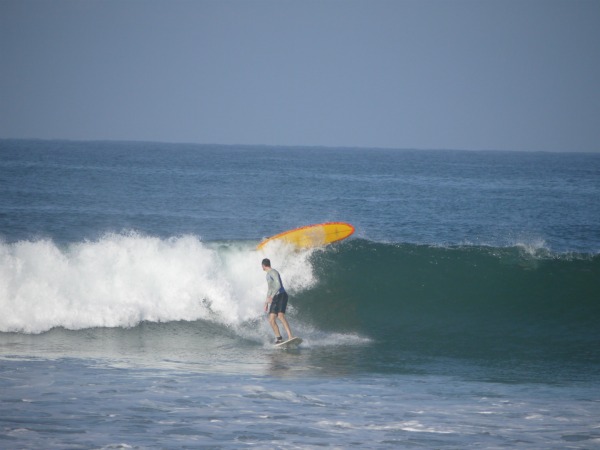
2) We’re getting good at obstacle course runs:
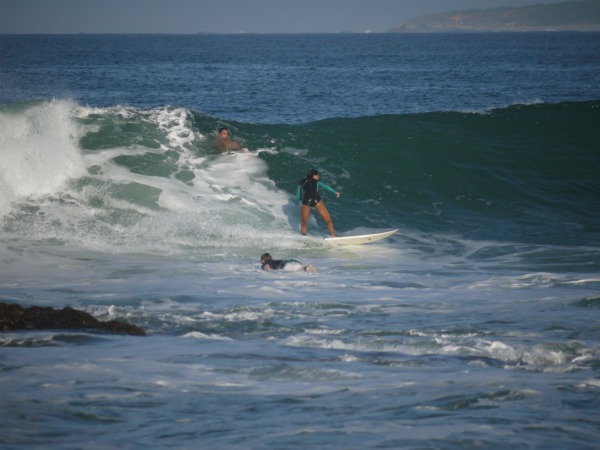
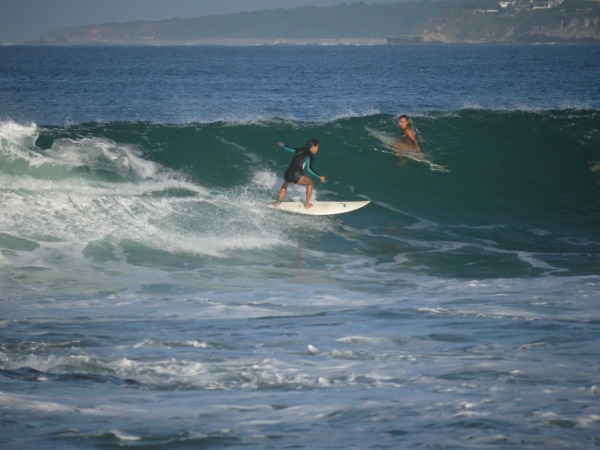
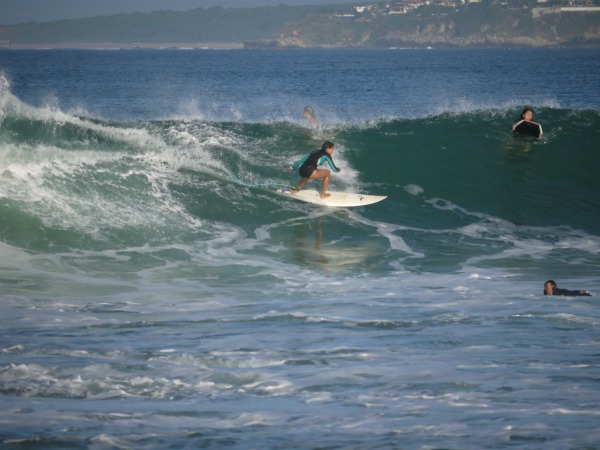
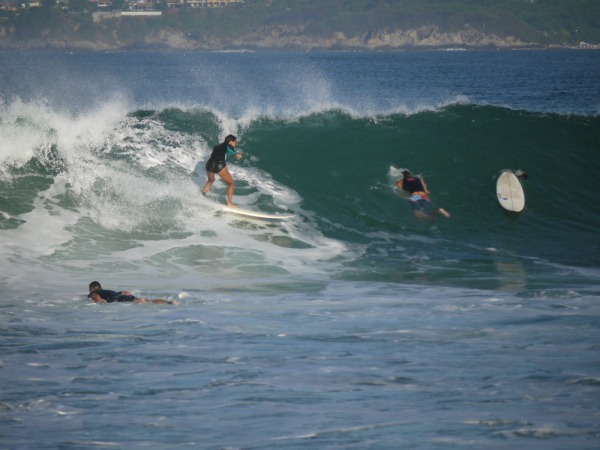
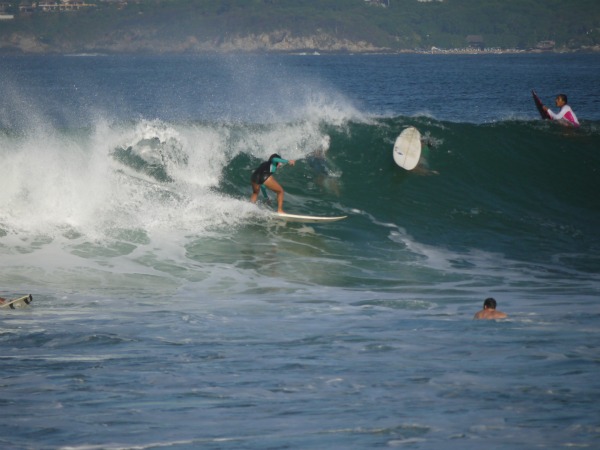
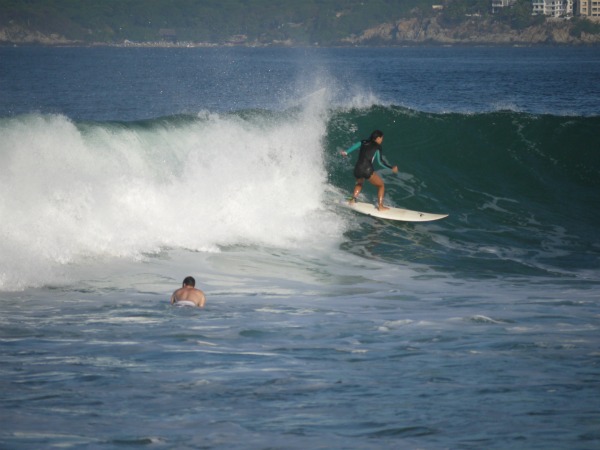
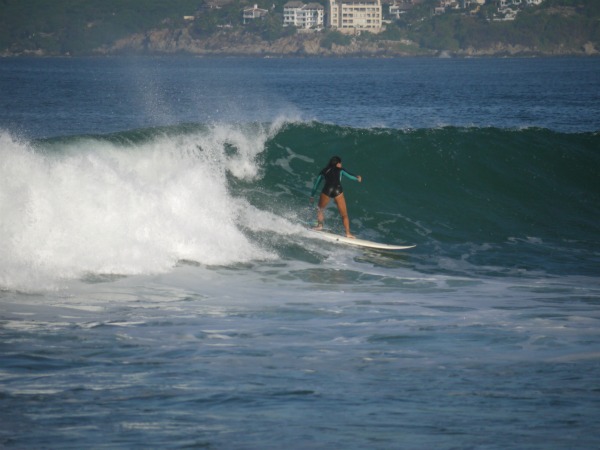
If you like these shots, you should see our wipeouts! (coming soon)
How much does it cost to surf round the world? — Month 1
We left New York on October 7th. Has it really only been a month? We feel entrenched in the little community of La Punta, but we still have so many nearby sites to visit (Laguna de Manialtepec, the hot springs, botanical gardens…) We’re going to stay at least one extra week than originally planned, so that Michael can enjoy some of La Punta’s fun waves, and so we can check out a few of those sites we’ve heard about.
We’ve given ourselves a rough target budget of $60 per day for both of us, for the entire trip. I know it’s a little ambitious, especially in places like Australia, New Zealand, and the South Pacific, but we’re hoping to be under budget in certain other places to compensate, and try out money-saving strategies such as couchsurfing and housesitting, if we can.
Our $60-a-day budget doesn’t include airfare, but it does include inter-city bus transportation, local transportation, food, accommodations, entertainment and other living expenses.
So, how have we been doing so far in our first month here?
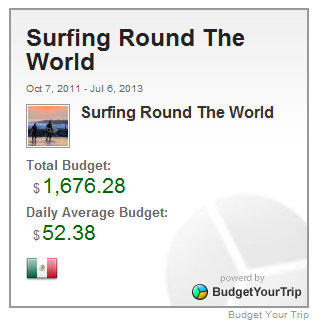
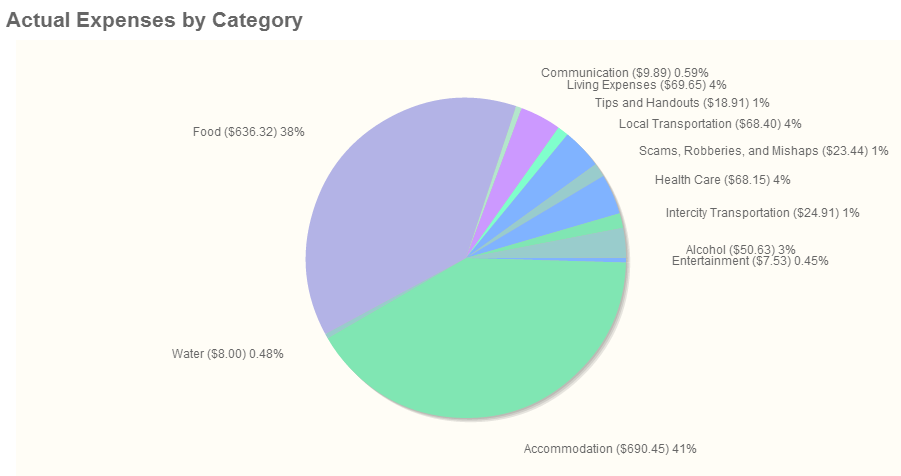
We’re doing pretty well, staying nicely under budget. We had hoped to be a little more under budget, to try and create a cushion for later in the trip when we hit the more expensive countries, but we’re still not doing too badly.
Accommodations and food are our number one costs right now. We’re not doing much touristy stuff since Michael hasn’t been too mobile for the past couple of weeks, but we’re also more interested in discovering everyday local life than doing a lot of sightseeing. A lot of our entertainment is derived from free or cheap activities, like wandering around neighborhoods in the town center, discovering every nook and cranny of the market, and — obviously — surfing.
Here are some ways we’ve managed to keep below budget:
- Renting an apartment by the month, you can negotiate a better per-night price than if renting by the day or week. N.B. We’re paying a bit of a premium for our apartment compared to other places around here, by backpacking standards, but we have the luxury of being one block away from the point break, our own kitchen, a lot of space (photos of our apartment to come in another post soon) and really cool hosts with whom we enjoy hanging out. We met a friendly surfer from New Zealand in the lineup who was staying at a place called Casa de Dan y Carmen, and his rent was half the amount we’re paying. He apparently had a lot of space and a kitchen, too, but the location is at Playa Zicatela, and it took 20 minutes walking, or a bus or colectivo ride, to get to La Punta. We couldn’t recommend Las Palomas (the apartment where we’re staying) more. The owners, Kim and Robert, are a super cool couple who have been extremely generous and helpful, and have made us feel at home. If you ever head over here, I can give you their info to check into renting an apartment for by the day, week or month.
- We cook at home about 70% of the time. This saves us a lot of money. We both love to cook, so it’s not a chore, and we enjoy shopping at the market and the grocery store, discovering new fruits and vegetables, and imitating dishes we sample in the area. A few of the delicious meals we’ve prepared ourselves are tortilla soup, fresh guacamole and nacho chips, and lots of different variations of veggie tacos (using rice, beans, tomatoes, zucchini, eggplant, queso fresco and homemade jalapeno salsa).
- Most local restaurants have a comida corrida around lunch or early dinnertime. It’s a set meal that often includes a glass of juice, soup, choice of main dish, and dessert. They’re incredibly good deals: our favorite Oaxacan restaurant, Las Margaritas, has a 40-peso comida corrida — that’s under $3! Eating lunch out is also usually cheaper than eating dinner out. We often eat out at lunch, and prepare dinner at home.

The Rinconada
We went over to an area called the Rinconada yesterday. It’s a street a few blocks long with shops and restaurants along one side of it, a little like a (more picturesque than normal) strip mall. Michael has been looking specifically for a copy of Murakami’s The Wind Up Bird Chronicle, to re-read, and we’d heard tell of an English-language lending library at the Rinconada.
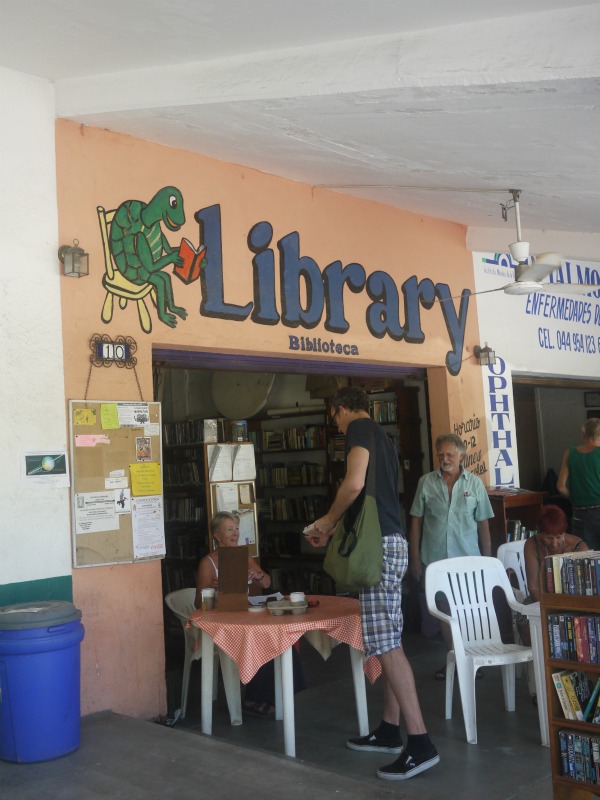
It’s open only three days a week, from 10 a.m. to 12 p.m, and it’s run by volunteers. They’ve actually got quite a good selection, but unfortunately no Wind Up Bird Chronicle. Alas, Michael will have to wait for the Kindle ebook to arrive on his hold at the Brooklyn Public Library.
We had a delicious (although expensive-for-here: $20!) lunch at El Cafecito, which has two outposts in Puerto Escondido: the one at the Rinconada, and another along the beachfront road called Calle Del Morro in Zicatela, in front of the thumping beachbreak.

The prices are a little high, but for $20 we got quite a lot: two large fresh mixed fruit juices, an appetizer of chips and guacamole, a veggie sandwich with salad, and a sauteed mahi mahi sandwich with fries and salad.
After lunch, even though we were stuffed, we had to visit the chocolate shop and have a truffle each, plus share a piece of dense chocolate cake.


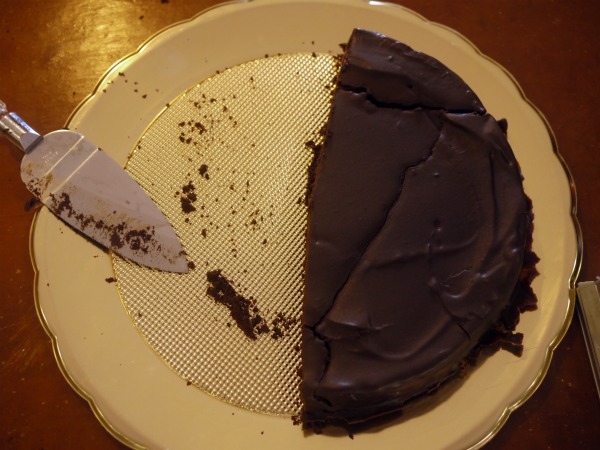
The slice of cake we had was one third of that portion in the photo.
We’ve seen these cool chairs around here, that are made from an iron frame and colorful vinyl strips. They’re pretty comfortable. The chocolate shop has a few of them, including small child-sized versions that are so adorable.


Cute graffiti on the wall at the Rinconada:
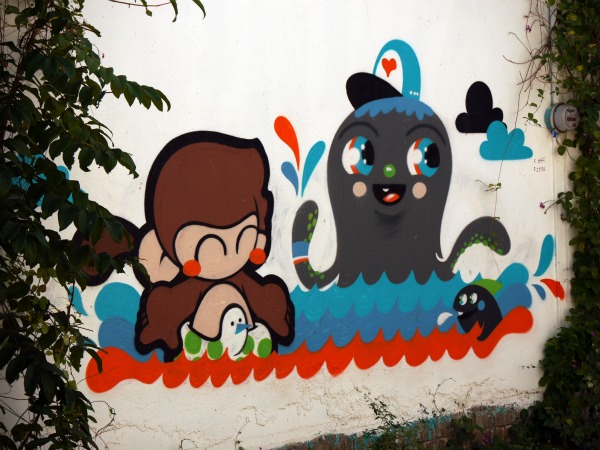
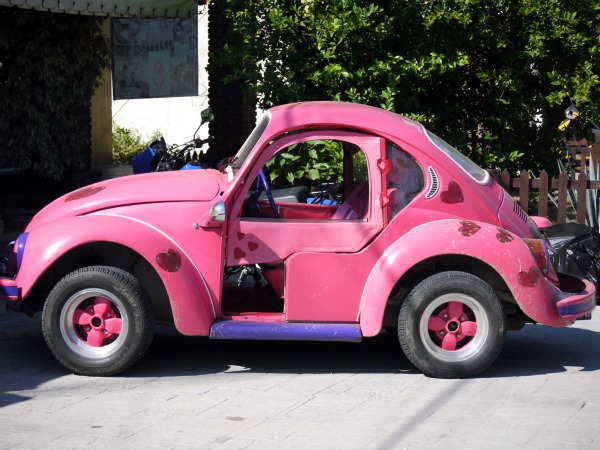
Funny pink pimped-out VW bug we saw there:
Michael’s foot is looking much better. It’s taken longer than we expected, because the wound didn’t seem to have been stitched up as tightly as it should have, but he has been walking without crutches for the past two days, and the cut now looks all closed up. Hopefully he’ll be back in the water in the next 2 or 3 days.
The waves have been good this past week, consistently head high to a couple of feet overhead. The forecast doesn’t show the waves dying down that much over the next ten days. It’s tempting to just hole up here for the rest of the trip, what with the amazing food, cheap cost of living and incredibly consistent, fun waves. The only downside is the amount of people in the water: from 8 a.m. on, there are at least 15 to 20 surfers all crowded onto the point, and about half of them are locals who have the spot totally wired and can take off deeper than any tourists. I’ve been waking up earlier and earlier to beat the crowds. Today at 6 a.m. there were only 4 people out and I caught a lot of good waves.

We’re thinking of heading to a spot called Chacahua in a couple of weeks, that we’ve heard has a good, uncrowded right point. It’s a bit of a haul (an hour by bus and another hour by boat) but it’s on a lagoon, and is supposed to be very beautiful. We are contemplating skipping Nicaragua and either going to Mal Pais in Costa Rica, or doing a combo of Mal Pais and staying in Mexico and checking out a couple of other spots (Chacahua, and we’ve also heard Barra de la Cruz is less crowded). Nicaragua doesn’t seem to get consistent surf in November/December, because the coastline kind of wraps inwards and isn’t exposed to north swells. Mal Pais is supposed to have year-round swell, because it’s at the tip of the Nicoya peninsula and can catch north swells. And we are currently witnessing that this part of Mexico is very consistent!
Tomorrow is the one-month mark of our trip. We’ll do a little post on whether we’ve been able to stay on budget or not… Hasta luego!
Random tidbits
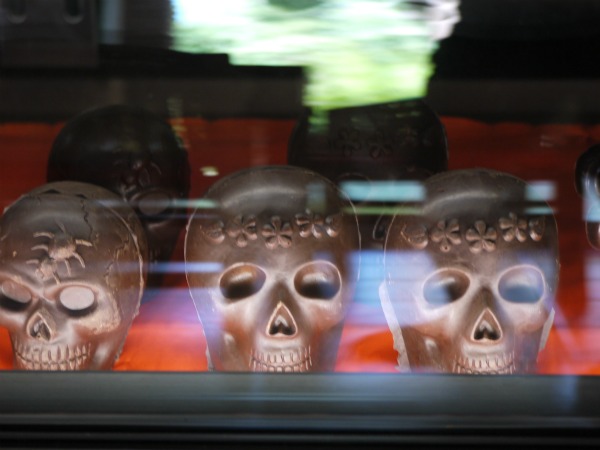
Today and tomorrow are the Mexican Day of the Dead, when everyone celebrates and remembers the lives of those close to them who have passed away. There are no celebrations going on here in our neighborhood of La Punta, because there are no cemeteries here; the celebrations are mostly occurring at the cemeteries in the main town area. There are small shrines arranged in public places, though, and chocolate skulls at the local fine-chocolate store:
We went to a Halloween party at one of the local restaurant/bars on Sunday night. Costumes were mandatory. Michael dressed as a palm tree, gamely making his crutches part of the costume (including two baby coconuts hanging from the crutch on the left!), and I was a hula girl:
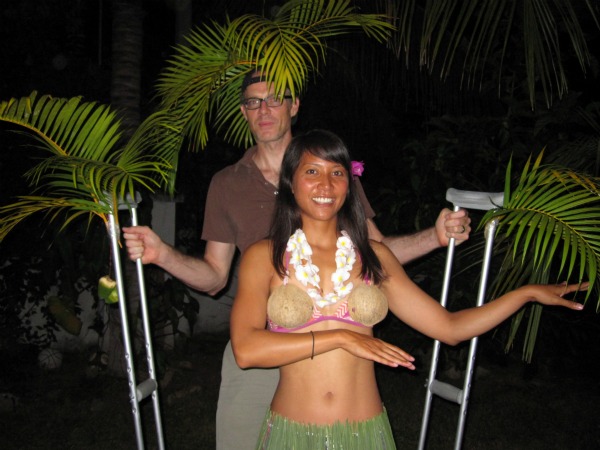
We didn’t win the costume contest, but we had fun and drank a little mezcal.
Our sweet and generous hosts, Kim and Robert, who own the house where our apartment is located, were instrumental in helping us with our costumes. Robert is a woodworker with tons of tools that we used to saw and drill holes in the coconuts I used for my bra, and they provided me with a sewing kit to make the grass skirt. We hijacked Michael’s palm fronds and the frangipani and bougainvillea flowers from Kim and Robert’s garden.
They took us to a cool little roadside stand a few days ago, that serves something called tepache: fermented pineapple juice. It was sort of like a pineapple-flavored kombucha. Someone should start making it in New York, it would be a hit with the crowd that’s into kombucha. The owner of the stand gave us a complimentary pineapple once we were done with our drinks. Here are Michael, Kim and Robert enjoying the cold drink in the hot sun:

The waves have been pretty non-existent over the weekend, which is better for Michael’s morale. Last week brought some good waves (photos below), and there should be some on the way starting tomorrow. Today some forerunners of the swell showed through, but the waits were long between sets.


Luckily, Michael has a cute, tiny gecko friend to keep him company in the apartment. We’ve named him Gonzalo, and he lives in one of the top corners of our studio. He’s the smallest, cutest gecko I’ve ever seen.

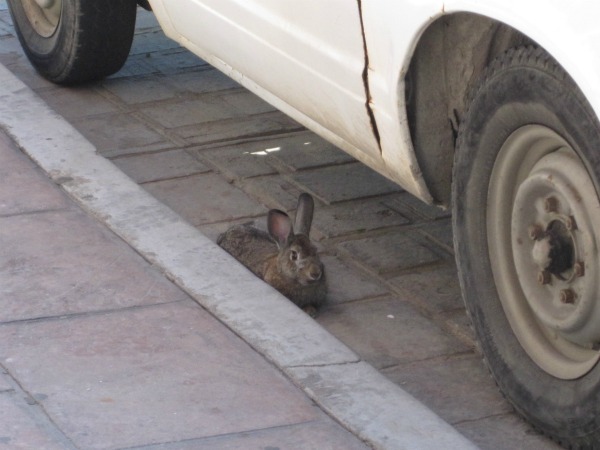
We’ve seen a lot of other cool wildlife, too:


Michael uses his injured foot to type an entry on Tech Gear
Okay, I didn’t actually type this with the messed up foot, but the foot did think up most of the good ideas in this post. I’m still nursing the stitches and happy to say they’re healing well. I’ve opted for the maddening route of not walking on it at all until I get the stitches out to speed the process and get me back in the water as fast as possible. That means I’m in our apartment all day, hopping around on one foot from the palapa on the roof to our place on the ground floor. We just learned that they stopped renting crutches in Puerto because so many people didn’t return them. So, anyone following in our path, remember to pack your own crutches.
With all this down time I should be posting here a lot, but I’ve been suffering from wave withdrawl, particularly now that a new overhead swell just filled in, and instead have been doing a lot of extremely technical hammocking with a book or the Kindle (see item 6 below).
But today I break out of my malaise to tackle one of the posts we’ve been planning since the beginning of the trip: a description of all the tech gear we brought in order to help other travellers during the incredibly complicated process of deciding what’s worth dragging around on your back over the course of a long trip. As the trip progresses we’ll update this with reports on the usefulness, durability and performance of each. This post will focus on the tech gear only – a following post will walk through the camera gear. So, here it is:
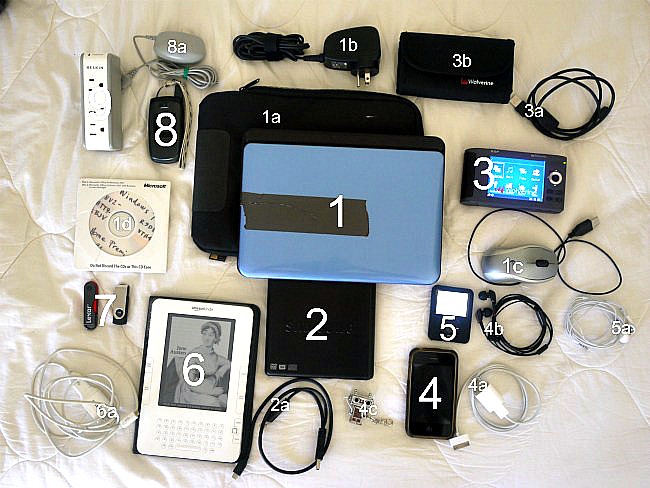
1) Dell inspiron Mini 1012: We decided that we needed a keyboard since writing is a big focus of our trip and despite some drawbacks, this little computer seemed to fit the bill. The piece of duct tape on the lid is a brilliant theft deterrent strategy. It has an Atom N450 processor that runs at 1.67 ghz – so it’s not exactly fast, but fast enough. The size and weight are pretty standard for netbooks – weighing in at under 3 pounds (1.37 kg for our friends everywhere but the US) and measuring 10.5 x 7.8 x 1.0-1.3 inches (268 x 197 x 25.5-32.8 mm). Also pretty standard, it has 3 usb-2 ports, a VGA connection for an external monitor, an ethernet connection and jacks for headphones and a microphone. We’ll write another post on the programs we use to make this thing as functional as possible.
Pros: It has a nearly full-sized keyboard (92% of the real thing) so typing is painless. It also has a good, clear monitor. With the 6 cell battery it has a maximum run-time of over 8 hours (though 6.5 seems more realistic when actually using a few apps). It also has upgradeable RAM (which many netbooks don’t have) so we went to http://www.crucial.com and upgraded it from the 1 GB it came with to 2 GB for about $35 US and it really seems to make a difference, running everything we need with decent speed and no crashing. It also has a card reader – so we simply insert the SD cards that all our cameras use into the slot on the side and we can instantly view and download all our pictures. One of the best things about this is that when we got it last year the list price was less than $300 and we got it through our cell phone carrier as an upgrade for an old account for less than $100 and then never activated it (perhaps not our most ethical move, but it was a cellphone company!). They’re still available from Amazon for about $250, and even at that price it wouldn’t be a major expense to replace, unlike the Mac we left at home.
Cons: As many users have noted the track pad is dismal – one of the worst I’ve ever used (hence item 1c). It also has pretty weak speakers, which is hardly surprising – they’re adequate for watching a movie or quietly listening to music, but don’t plan any parties, or expect this to compete with even moderate noise competition. And finally, it comes with Windows 7 Starter, which probably would have been fine, but it doesn’t support VPNs (which we’ll talk more about in another post) so we upgraded to Windows 7 Home Premium (a legit copy – very kindly provided by my brother-in-law Ian).
1a) A decent sleeve that fits the Dell perfectly – $13.
1b) The power adapter for the Dell – a bit bulky, but it has a light on the end that plugs into the computer so you know it’s actually charging.
1c) Logitech travel mouse. As noted above, the main drawback to the netbook is the lousy trackpad, so we brought this – small, durable and about $12.
1d) The back-up discs for Windows 7 Home, device drivers and MS Office.
2) Samsung Ultra Slim external DVD writer – like all netbooks, the Dell doesn’t have an optical drive and while it’s not mandatory we decided to bring this along for two main reasons: 1) if we ever need to restore the system it’s infinitely easier with the drive, and 2) it’s nice to be able to watch a DVD every once in a while (particularly when you’re injured). This drive is small and very light (less than 12 ounces) and seems pretty durable. It cost less than $40 at B&H in New York.
2a) The cable for the drive uses 2 USB ports – but the external hard drive we brought (item 3) uses the same set-up, so we left one of the cables at home.
3) Wolverine ESP-5000 External Hard Drive with card reader – This 250 GB external hard drive has built-in card readers and a full-color screen. So we can directly download, view and edit our photos here. It also acts as a regular external drive so we can back up all our documents from the computer here. It was about $300 (thank you AMEX points) last year at B&H in NY. And while it’s been discontinued, there are a lot of similar products available. So far this hasn’t gotten much use as we’re using the card reader on the netbook and backing up documents in Google Docs, so we’ll see if this lasts the full trip. Comes with a soft case 3b).
3a) Charging cable for the Wolverine drive. As I noted in 2a, above, this shares a two-USB data transfer cable with the Samsung DVD burner – this cable allows its battery to charge from the computer’s USB port and also doubles as the charging cable for our GoPro digital camera, which you’ll meet in the upcoming Photo Gear entry.
4) iPhone 3 – very generously bequeathed to us by my sister, Elisabeth. We only use it on wifi networks for checking internet and making Skype calls, but it’s an incredibly handy and discrete alternate to pulling out the netbook. Plus we’re able to download apps and use them – I got a (questionably accurate) pedometer app so we could see how far we were hiking into town (~2.3 K).
4a) Charger for iPhone, which also charges the iPod Nano (item 5)
4b) Earbud headphones with a microphone for making Skype calls on the netbook and the iPhone. Came free with a Blackberry last year.
4c) Robot headphone splitter – another awesome present from my sister Elisabeth. This allows us to both plug our headphones in and listen to the same device.
5) iPod Nano 16GB – so far it hasn’t gotten any use, but it’s small and I’ve had it for years so, what the heck. With the inevitable white headphones 5a).
6) Amazon Kindle – another amazing present, this one from our friend Kim. We had long debated whether we’d bring one of these on the trip and we would have been beating ourselves with giant, hard tortillas if we hadn’t. We have a subscription to the NewYorker and get new issues every week, plus there are thousands of public domain books and (as Delphine noted earlier) library books available. It’s amazing we don’t fight over this thing more often. I did download the Kindle app on the netbook too, so we can both read the stuff in our accounts. One of the greatest uses for the Kindle though, is travel books – Lonely Planet guides are all available on it, which saves us a huge amount of weight carrying them and inconvenience tracking them down in foreign countries. We will definitely replace this if something happens to it. Has its own 6a) charger.
7) USB memory sticks – the best way to physically back-up files and safely store away from the computer. We have a 4 GB and a 2GB. The 4 GB was an incredibly cool gift from our friend Alan, who loaded it up with episodes of This American Life and RadioLab.
8 ) A cheap unlocked Nokia quad-band GSM phone – we used this with a pre-paid SIM card during our stay in Montreal and it was incredibly useful having a local phone during that hectic time. We haven’t put a SIM in it in Mexico, but we’ll see if it makes sense in any of our other destinations. $35 shipped from Amazon. With a somewhat bulky charger 8a).
9) Belkin Travel Surge Protector – three grounded outlets and two USB ports on the top means we can charge all our devices without worrying about questionable power as we travel. $25.
So that’s the lot. Let us know if you have any questions. And please, if you have any suggestions on using or tweaking anything in this collection, drop a line.
First surfing mishap
Michael had his first surfing mishap this afternoon.

We were surfing chest high waves at the beachbreak beside La Punta, when a surfer paddled into Michael’s path as he was riding down the line. Michael kicked off the wave to avoid the other surfer, landing in the water, and the guy duck-dived his board into Michael. The pointy nose of the board tore a 2-inch long gash in the bottom of Michael’s foot. The cut was deep enough that you could see the layers of fat and muscle in there. Who knew Michael had fat feet? 🙂
A lifeguard in an ATV drove Michael to the nearest clinic, called Centro Salud, about 7 minutes away, and I ran back to our apartment to grab some cash. When I got to the clinic, Michael was in a room with a nurse, frantically trying to ask her in broken Spanish not to sew the cut up with all the sand that was still in there. We pieced together some bad Spanish sentences, letting her know there was still some sand in the wound (“Ha camina con su pie a la playa, hay mucho particulas en la laceracion!”), so the doctor came in and washed the cut out forcefully a few more times with a syringe.

The cut needed five stitches.
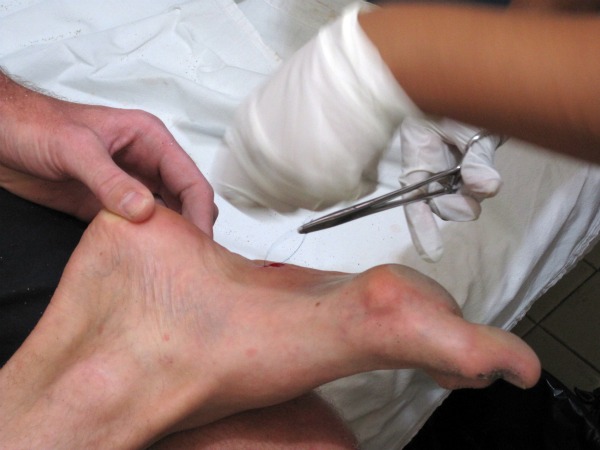
The care and medications (antibiotics and anti-inflammatories) all came out to around $11 US. Michael’s out of the water for the next 2 weeks, so expect to see more upcoming posts from him. He’s fine now, and still happy as a clam.
The strange thing is that our landlords had just recounted a story yesterday to us, about how a previous American renter of theirs had been surfing at La Punta when another surfer ran the nose of their board into his leg. He had only been in Mexico for two days, and was taken to the clinic in an ambulance and stitched up. I guess the moral of the story is: avoid surfing near people with pointy-nosed boards.
What about Dad?
I never posted the – thankfully, happy! – end to my dad’s health story. Some of you may have heard by word of mouth, but some of you are probably wondering why we haven’t mentioned anything again about my dad’s diagnosis of cancer a few months ago.
First off, here’s a question for you: When is tuberculosis a good diagnosis?
When it’s the alternative to cancer!
It turns out Dad has extra-pulmonary TB and not cancer. We were relieved beyond words to finally receive a diagnosis and treatment plan back in September, and happy that it’s something curable and easily treatable. It was a long, slow road — especially for my father, who not only had to wait for all the results, but also had to go through countless biopsies and blood tests and one pretty heavy surgery.
Extra-pulmonary TB is not contagious and generally not as fast-moving as pulmonary TB. Dad didn’t have any symptoms apart from the original, enlarged lymph node.
Dad is now on a long course of antibiotics, but feeling great and ready to start road tripping to visit his grandkids again. We are still counting our lucky stars on this one!

 Surfing Round The World